
If you are planning your first trip to northern Vietnam, Sapa is one of the destinations worth considering. Located in the Hoang Lien Son mountain range, Sapa combines dramatic mountain scenery, ethnic villages, terraced landscapes, local food and access to Fansipan, the highest mountain in Vietnam.
The challenge is that Sapa offers many different experiences, and first-time visitors often need to decide how many days to stay, where to stay, how to arrive and which activities are worth including.
This complete Sapa Travel Guide brings the essential information together so you can build your trip before moving on to the more detailed guides on individual activities, accommodation and transportation.
Table of Contents
Sapa Travel Guide: Quick Answer
Sapa is best suited to travelers who enjoy mountain scenery, cultural experiences, outdoor activities and slower-paced travel.
For a first visit, 2–3 nights is a practical starting point.
A typical trip could combine:
- Sapa town
- Fansipan
- Muong Hoa Valley
- Local villages
- Rice terrace landscapes
- Local food
- Mountain viewpoints
- Trekking or countryside walks
Your ideal itinerary depends on the season, weather, walking ability and whether you want a relaxed or activity-packed trip.
For detailed seasonal information, see our [Best Time to Visit Sapa] guide.
Where Is Sapa?
Sapa is a mountain town in Lao Cai Province, northern Vietnam, close to the border with China.
The town sits at an elevation of roughly 1,500 metres and is surrounded by the Hoang Lien Son mountain range.
Its location makes Sapa very different from Vietnam’s major lowland destinations.
Instead of beaches and tropical scenery, visitors come for:
- High mountains
- Deep valleys
- Rice terraces
- Cool mountain weather
- Ethnic villages
- Hiking and trekking
- Scenic viewpoints
Sapa is also the main tourism base for exploring Fansipan, the highest peak in Vietnam.
Why Visit Sapa?
Sapa offers a combination of experiences that is difficult to find in one destination.
Mountain Landscapes
The surrounding mountains create spectacular viewpoints throughout the region.
Weather conditions can dramatically change the appearance of the landscape, from clear panoramic views to mist-covered valleys.
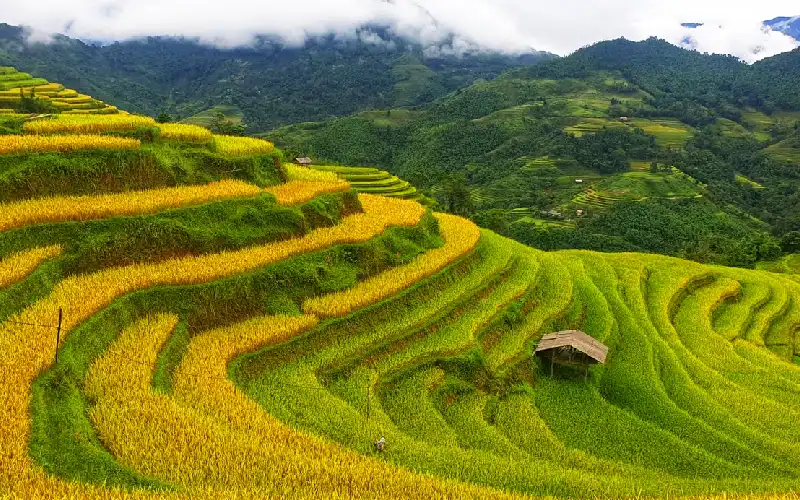
Rice Terraces
Terraced fields are one of Sapa’s most recognizable landscapes.
The terraces follow the contours of the mountains and create layers across the valleys.
Their appearance changes throughout the agricultural cycle, so the scenery can look very different depending on when you visit.
Local Villages
Villages around Sapa provide opportunities to see rural life beyond the main tourist center.
You can explore local communities, traditional houses, agricultural areas and countryside paths.
Outdoor Experiences
Sapa is particularly suitable for travelers who enjoy outdoor activities.
Depending on your itinerary, you can include:
- Trekking
- Hiking
- Scenic walks
- Mountain sightseeing
- Cable-car access to Fansipan
- Village exploration
- Photography
For a detailed activity guide, see [Best Things to Do in Sapa].
How Many Days Do You Need in Sapa?
There is no single answer because the ideal length depends on your travel style.
1 Night
Suitable for travelers who are passing through northern Vietnam and mainly want to see Sapa town or Fansipan.
However, the schedule can feel rushed because transportation takes a significant portion of the trip.
2 Nights
A practical option for a short Sapa trip.
You can combine:
Sapa town + Fansipan + countryside experience
3 Nights
A better option for travelers who want a more relaxed experience.
You can include:
Sapa town + Fansipan + village experience + trekking
Our [Sapa 3 Days 2 Nights Itinerary] provides a more detailed example.
4+ Nights
Useful if you want to travel more slowly, spend more time in villages or combine several outdoor activities.
Longer stays also provide more flexibility if weather affects your plans.
How to Get to Sapa
Sapa does not have its own airport, so most travelers reach the town through Lao Cai or travel directly from Hanoi by road.
The main transportation options include:
Sleeper Bus
Direct buses from Hanoi are one of the most convenient options.
Advantages include:
- Direct connection
- No train transfer
- Several departure options
- Convenient for overnight travel
Limousine / Tourist Minivan
Limousine-style vehicles provide another popular option for travelers who prefer a more comfortable road journey.
Depending on the service, pickup may be available from central Hanoi or other designated locations.
Train + Transfer
Travelers can take a train from Hanoi toward Lao Cai and then continue by road to Sapa.
This option can be attractive for visitors who prefer rail travel, although the additional transfer needs to be considered when calculating total travel time.
For a detailed comparison, see our [Hanoi to Sapa Transportation Guide].
Getting Around Sapa
Once you arrive, your transportation needs depend heavily on your itinerary.
For central Sapa, many places can be reached on foot.
For attractions and villages outside the town center, options may include:
- Taxi
- Local transfer
- Motorbike
- Private car
- Tour transportation
If you are planning trekking, transportation can often be arranged to the starting point and from the finishing point.
The most convenient option depends on the route and whether you are traveling independently or with a guide.
Best Things to Do in Sapa
Sapa offers more than just trekking.
A first-time itinerary can combine several different experiences.
Explore Sapa Town
Spend time walking around the town center, visiting local cafés, restaurants and viewpoints.
Visit Fansipan
Fansipan is the highest mountain in Vietnam and one of the major attractions in the region.
Visitors can reach the summit area using the mountain cable-car system combined with other transport options and walking sections.
For a dedicated guide, see [Fansipan Travel Guide].
Explore Mountain Villages
Villages around the Muong Hoa Valley provide opportunities to experience the countryside and local communities.
See Rice Terraces
The terraced landscapes are one of the defining visual features of Sapa.
Try Local Food
Sapa’s cooler mountain environment and local culinary traditions create a different food experience from Hanoi and other Vietnamese destinations.
Popular choices include grilled dishes, local vegetables, hotpot and regional specialties.
Enjoy Mountain Views
Even without a long trek, there are many opportunities to enjoy panoramic views around Sapa.
For the full activity list, visit [Best Things to Do in Sapa].
Sapa Trekking
Trekking deserves its own category because it is one of the main reasons travelers visit the region.
The important thing is to understand that Sapa trekking does not mean one specific route.
Different trails offer different combinations of:
- Walking distance
- Elevation changes
- Village scenery
- Rice terraces
- Mountain views
- Trail conditions
For beginners, a shorter village walk may be enough.
More experienced travelers can choose longer routes or overnight village experiences.
For detailed route comparisons, difficulty levels and preparation advice, see our [Sapa Trekking Guide].
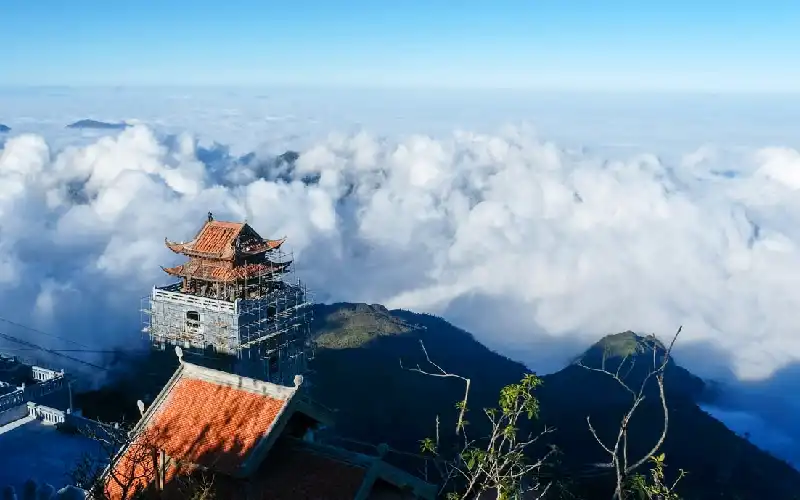
Fansipan: Vietnam’s Highest Mountain
Fansipan rises to approximately 3,143 metres above sea level and is the highest mountain in Vietnam.
It is part of the Hoang Lien Son range and has become one of Sapa’s most recognizable attractions.
There are different ways to experience Fansipan.
For many visitors, the cable car provides the easiest access to the mountain area, while others are interested in hiking and the surrounding mountain environment.
Weather conditions can significantly affect visibility, so it is worth keeping your schedule flexible.
Muong Hoa Valley
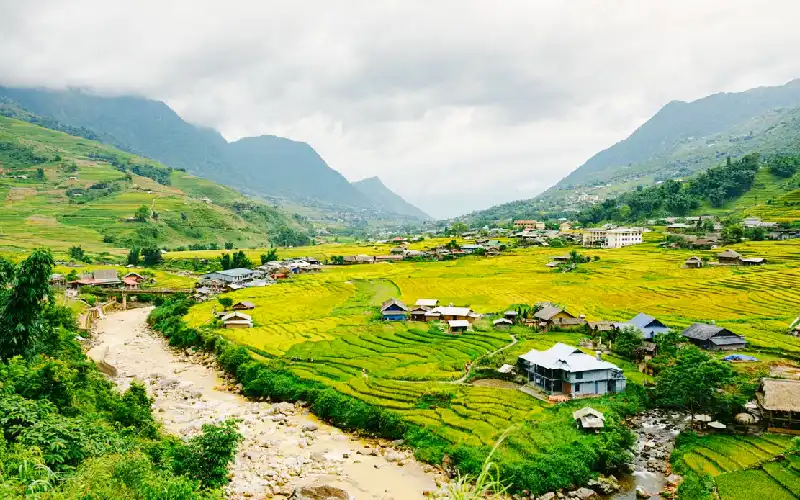
Muong Hoa is one of the major scenic areas near Sapa.
Rather than treating it as a single attraction, think of Muong Hoa as a broad valley landscape containing rice terraces, villages, streams and mountain trails.
This makes it suitable for several types of travelers:
- Photographers
- Hikers
- Families
- Couples
- Nature lovers
- Travelers interested in local culture
Muong Hoa can also be incorporated into longer village routes.
Sapa’s Villages and Local Culture
One of the most interesting aspects of traveling around Sapa is the opportunity to see rural communities outside the main town.
Depending on the route, visitors may encounter villages associated with different ethnic communities and experience aspects of traditional rural life.
A respectful approach is important when visiting residential areas.
Travelers should:
- Respect local customs
- Ask before photographing people
- Avoid entering private homes without permission
- Follow local guidance
- Avoid treating residential communities simply as tourist attractions
This approach creates a more meaningful cultural experience while respecting the people who live there.
Sapa Rice Terraces
The rice terraces around Sapa are closely connected to local agriculture.
Instead of being a single viewpoint, they form an extensive landscape across mountain valleys.
Their appearance changes according to the agricultural cycle.
At different times, you may see:
- Water-filled terraces
- Bright green rice fields
- Mature crops
- Harvest landscapes
- Misty mountain scenery
This is one reason why the timing of your trip can influence the visual experience.
For a detailed month-by-month explanation, see [Best Time to Visit Sapa].
What Makes Sapa Different From Other Northern Vietnam Destinations?
Sapa works particularly well as part of a broader northern Vietnam itinerary because its landscape is very different from destinations such as Ninh Binh and Ha Long Bay.
| Destination | Main Experience |
|---|---|
| Hanoi | History, food & city culture |
| Sapa | Mountains, villages & outdoor activities |
| Ha Giang | Mountain landscapes & road journeys |
| Ninh Binh | Limestone landscapes, rivers & countryside |
| Ha Long Bay | Islands, caves & cruises |
This variety makes it possible to build a northern Vietnam journey around several completely different environments.
Planning Your First Sapa Trip
Before booking everything, answer five simple questions:
1. How many nights do I have?
This determines how much you can realistically include.
2. What type of experience do I want?
Trekking, Fansipan, culture, photography, food or a combination?
3. How much walking do I want to do?
Not every Sapa trip needs a long trek.
4. Where do I want to stay?
Sapa town and village accommodation provide very different experiences.
5. Where am I going next?
Sapa can be combined with destinations such as Ha Giang, Ninh Binh and Ha Long Bay.
Planning these elements together will make transportation and accommodation much easier to organize.
Where to Stay, Transportation, Costs & Practical Tips
Once you have decided how long to stay in Sapa, the next step is planning the practical details. Where you stay, how you travel around the region and how much you budget can significantly affect your overall experience.
Sapa offers accommodation and travel options for different budgets, from simple local stays to comfortable hotels and premium mountain-view properties.
Where to Stay in Sapa
Choosing where to stay depends largely on what you want to do during your trip.
For a first visit, staying in or close to Sapa town center is usually the most convenient option because restaurants, cafés, shops, transportation and many services are nearby.
However, travelers who prioritize scenery and cultural experiences may prefer accommodation outside the center.
Main Accommodation Areas
| Area | Atmosphere | Best For |
|---|---|---|
| Sapa Town Center | Convenient & lively | First-time visitors |
| Around Sapa Lake | Relaxed & central | Couples & leisure |
| Muong Hoa Valley | Scenic & quieter | Nature lovers |
| Ta Van Area | Rural & peaceful | Homestay experience |
| Mountain-view outskirts | Quiet & scenic | Couples & longer stays |
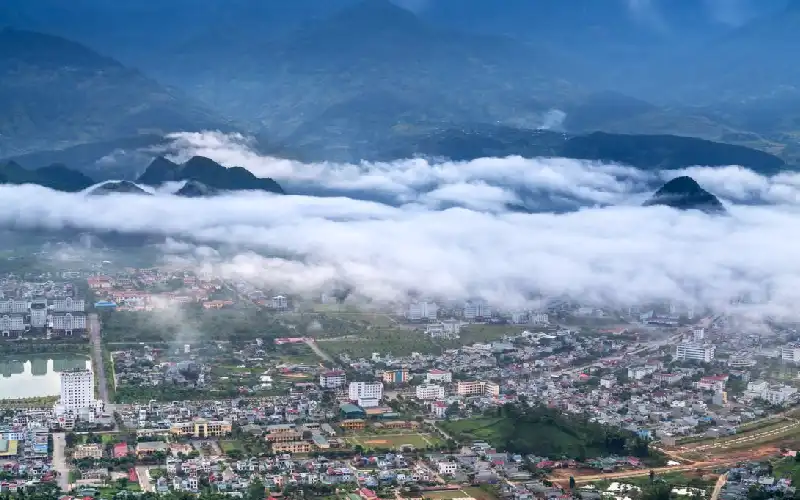
Staying in Sapa Town
Sapa town is the easiest base for most first-time visitors.
You will have convenient access to:
- Restaurants
- Cafés
- Shops
- Transportation
- Fansipan-related services
- Tour operators
- Local markets
- Walking areas
The main advantage is convenience.
If your itinerary includes several activities and you do not want to spend too much time traveling between your hotel and the town center, this can be a practical choice.
Staying Around Muong Hoa Valley
Muong Hoa is more suitable for travelers who want scenery rather than immediate access to the town center.
The area offers:
- Mountain views
- Rice terraces
- Valley landscapes
- Quieter surroundings
- Access to village trekking routes
Some properties are designed around panoramic views, making the accommodation itself part of the travel experience.
The trade-off is that you may need transportation when visiting Sapa town.
Staying in Ta Van
Ta Van is a good option if you want a more rural experience.
Accommodation here can include local homestays and smaller guesthouses.
Staying overnight allows you to experience the countryside after day visitors have left.
This can be particularly appealing for travelers interested in:
- Local culture
- Village life
- Rice terraces
- Quiet surroundings
- Trekking
- Homestay experiences
For a broader accommodation comparison, see our [Best Hotels in Sapa] guide.
How Much Does Accommodation in Sapa Cost?
Accommodation prices vary according to location, season, room type, facilities and booking date.
The following figures are indicative ranges for planning purposes only:
| Accommodation Type | Typical Indicative Price |
|---|---|
| Basic hostel / budget stay | US$8–20+ per night |
| Simple guesthouse | US$15–35+ |
| Mid-range hotel | US$30–70+ |
| Boutique / mountain-view hotel | US$50–120+ |
| Luxury resort / premium property | US$100–250+ |
Prices can increase during weekends, holidays and periods of high demand.
A lower-priced room may also have fewer facilities or a less central location, so compare the total value and location, not only the room rate.
How to Choose a Sapa Hotel
Before booking accommodation, consider five factors.
1. Location
Do you want to walk to restaurants and cafés, or would you prefer a quiet mountain setting?
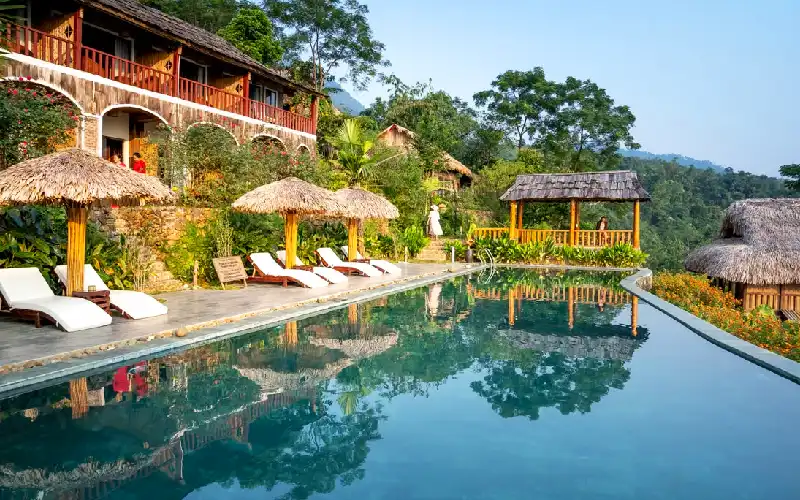
2. View
Mountain-view rooms can cost more, but the scenery may be an important part of the Sapa experience.
3. Transportation
If your hotel is outside the town center, check how easy it is to arrange transportation.
4. Breakfast
Breakfast can be useful if you plan to start trekking or sightseeing early.
5. Cancellation Policy
Mountain weather can affect travel plans, so flexible booking conditions can be valuable when available.
How Much Does a Sapa Trip Cost?
Your total budget depends on transportation, accommodation, food, activities and travel style.
A useful way to estimate your spending is to divide the trip into five categories:
Transportation + Hotel + Food + Activities + Miscellaneous
Indicative Daily Budget
| Travel Style | Approximate Daily Budget |
|---|---|
| Budget | US$25–50+ |
| Mid-range | US$50–100+ |
| Comfortable | US$100–180+ |
| Premium | US$180+ |
These figures are broad planning estimates rather than fixed package prices.
Transportation from Hanoi and larger activities such as Fansipan should normally be calculated separately when building a complete trip budget.
Food Costs in Sapa
Sapa offers everything from inexpensive local meals to restaurants aimed at international visitors.
Indicative prices may look like:
| Food Option | Approximate Cost |
|---|---|
| Simple local meal | US$2–5+ |
| Casual restaurant | US$4–10+ |
| Café / drinks | US$2–6+ |
| Hotpot / shared meal | US$8–20+ per person |
| Higher-end dining | US$15–40+ |
Actual prices vary by restaurant, location and menu.
Trying local dishes can also be an important part of the experience rather than simply looking for familiar international food.
Transportation Costs in Sapa
Transportation costs depend on where you are going and how many people are traveling together.
Possible options include:
- Walking
- Taxi
- Motorbike
- Local transfer
- Private car
- Tour transportation
For short distances within town, walking can be practical.
For villages and attractions outside the center, arranging transportation in advance may save time.
If you are traveling as a family or group, comparing the total cost of a private transfer with individual transportation can be useful.
For your journey from Hanoi, see our [Hanoi to Sapa Transportation Guide].
What Should You Pack for Sapa?
Your packing list should reflect the activities you plan to do.
For a general Sapa trip, consider bringing:
- Comfortable walking shoes
- Lightweight clothing
- Warm layers
- Rain jacket
- Small backpack
- Water bottle
- Sunscreen
- Hat
- Personal medication
- Power bank
- Phone
- Basic toiletries
If trekking is part of your itinerary, footwear and rain protection become particularly important.
You can find more detailed equipment advice in our [Sapa Trekking Guide].
What About Sapa Weather?
Sapa’s mountain environment means conditions can differ from Hanoi and other lowland destinations.
Temperatures can change during the day, while clouds, rain and mist can affect visibility.
Instead of packing based only on the average temperature, prepare for changing conditions.
A useful approach is to bring layers so you can adjust throughout the day.
For detailed seasonal information, see our [Best Time to Visit Sapa] guide.
Sapa for Different Types of Travelers
Sapa can work for very different travel styles.
Sapa for Couples
Couples may prefer:
- Mountain-view accommodation
- Scenic cafés
- Village walks
- Photography
- Relaxed meals
- A slower itinerary
A hotel with a good view can be part of the experience rather than simply somewhere to sleep.
Sapa for Families
Families may prefer a more flexible itinerary with shorter walking sections.
Consider combining:
Sapa town + Fansipan + easy countryside exploration
Rather than scheduling a long trek every day, leave enough time for rest.
Accommodation with convenient access to restaurants and transportation can also make the trip easier.
Sapa for Solo Travelers
Solo travelers often have more flexibility to change their itinerary.
A combination of:
- Group activities
- Guided trekking
- Local food
- Cafés
- Village exploration
can provide a balanced experience.
For longer or less familiar routes, joining a guided trek can also make logistics easier.
Sapa for Photography
Sapa is particularly attractive for travelers interested in landscape photography.
Useful subjects include:
- Rice terraces
- Mountain valleys
- Village paths
- Traditional houses
- Misty landscapes
- Mountain roads
- Local markets
- Sunrise and sunset scenery
However, weather is a major variable.
Cloudy conditions can sometimes reduce distant visibility while creating a completely different atmosphere in the mountains.
How to Plan Your Daily Schedule
Avoid filling every hour of your Sapa itinerary.
Mountain travel can involve longer transportation times than expected, and weather may affect outdoor activities.
A practical daily structure could be:
Morning: Main activity
Midday: Lunch + rest
Afternoon: Second activity
Evening: Food + relaxed exploration
This gives you some flexibility if your morning activity takes longer than planned.
How Much Should You Budget for Activities?
Activities vary considerably in price.
For planning purposes:
| Activity | Indicative Cost |
|---|---|
| Walking around town | Free |
| Local sightseeing | Low to moderate |
| Guided half-day activity | US$15–40+ |
| Full-day trekking | US$25–70+ |
| Homestay experience | US$40–100+ |
| Premium private experience | US$50–100+ |
These are general estimates. Actual prices depend on the provider, inclusions, season, group size and booking date.
For Fansipan, transportation and access costs should be checked separately because the total expense depends on how you arrange your visit.
Should You Book Everything in Advance?
Not necessarily.
The answer depends on the season and your travel style.
It is generally useful to arrange the important parts of your trip first:
Transportation → Accommodation → Major Activities
Then leave smaller activities flexible where possible.
For popular travel periods, booking accommodation and transportation earlier can provide more choice.
For quieter periods, you may have greater flexibility.
A Practical Sapa Planning Formula
For a first-time visitor, a simple planning formula is:
2 Nights
Day 1: Arrive + explore Sapa
Day 2: Main activity + countryside experience
Day 3: Depart
3 Nights
Day 1: Arrive + Sapa town
Day 2: Trekking / villages
Day 3: Fansipan + relaxed exploration
Day 4: Depart
4 Nights
Day 1: Arrive
Day 2: Trekking
Day 3: Fansipan + town
Day 4: Village / countryside experience
Day 5: Depart
These are examples rather than fixed itineraries. Your actual schedule should be adjusted around transportation times and weather.
Building a Northern Vietnam Trip Around Sapa
Sapa does not have to be a standalone destination.
For travelers with more time, it can become one part of a larger northern Vietnam itinerary.
For example:
Hanoi → Sapa → Ninh Binh → Ha Long Bay → Hanoi
This route combines three very different landscapes:
Sapa: mountains and villages
Ninh Binh: rivers, caves and limestone landscapes
Ha Long Bay: islands and an overnight cruise experience
If you continue south from Sapa, our [Sapa to Ninh Binh Transportation Guide] can help with the next stage of your journey.
If you prefer to visit Ha Giang after Sapa, see our [Sapa to Ha Giang Travel Guide].
Before Booking Your Sapa Trip
Before confirming your travel arrangements, check:
- Travel dates
- Weather forecast
- Transportation schedule
- Hotel location
- Cancellation conditions
- Trekking difficulty
- Activity inclusions
- Transportation between attractions
- Total trip budget
Most importantly, avoid choosing an itinerary simply because it contains the largest number of attractions.
Sapa is a destination where slowing down can be part of the experience.
Sapa Itineraries, FAQs & Northern Vietnam Travel Planning
Once your transportation, accommodation and activities are planned, the final step is putting everything into a realistic itinerary.
The key is not to see as many places as possible. A good Sapa itinerary should leave enough time for mountain travel, weather changes and unexpected delays.
2-Day Sapa Itinerary
A two-day itinerary works well for travelers with limited time.
Day 1: Arrive in Sapa & Explore the Town
Morning / Early Afternoon
Travel from Hanoi to Sapa.
After checking in, take some time to rest and explore the town.
Depending on your arrival time, you can visit:
- Sapa town center
- Sapa Lake
- Local cafés
- Restaurants
- Local markets
Afternoon
Explore the town at a relaxed pace and enjoy the surrounding mountain scenery.
Avoid scheduling a demanding activity immediately after a long journey if you arrive later in the day.
Evening
Enjoy dinner and prepare for the following day’s main activity.
Day 2: Countryside Experience & Departure
Start early and choose one major experience:
Option A: Muong Hoa Valley + village experience
Option B: Fansipan
Option C: Short trekking route
After your activity, return to Sapa, collect your luggage and continue to your next destination.
For travelers continuing toward Ninh Binh, see our [Sapa to Ninh Binh Transportation Guide].
3-Day Sapa Itinerary
Three days provides a better balance between sightseeing and relaxation.
Day 1: Hanoi → Sapa
Travel to Sapa and check into your accommodation.
Spend the afternoon exploring the town rather than trying to fit in a major attraction.
Suggested evening
- Explore Sapa town
- Try local food
- Visit a café
- Rest before the next day’s activities
Day 2: Sapa Trekking & Villages
Dedicate the day to the countryside.
A possible route is:
Sapa → Muong Hoa Valley → Lao Chai → Ta Van
Take your time with photography and breaks.
You can find detailed route information in our [Sapa Trekking Guide].
Return to Sapa in the afternoon or evening.
Day 3: Fansipan & Departure
If weather conditions are suitable, spend the morning exploring Fansipan.
Allow enough time for transportation and the mountain experience before returning to Sapa.
After lunch, collect your luggage and continue your journey.
For a more detailed version, see [Sapa 3 Days 2 Nights Itinerary].
4-Day Sapa Itinerary
Four days allow you to slow down and include more than one major outdoor experience.
Day 1 — Arrive in Sapa
- Travel from Hanoi
- Check in
- Explore Sapa town
- Dinner and rest
Day 2 — Full-Day Trekking
Explore:
Muong Hoa Valley → Lao Chai → Ta Van
Spend the day experiencing the countryside rather than rushing between attractions.
Day 3 — Fansipan
Dedicate the day to Fansipan and the surrounding mountain area.
If weather conditions are not suitable, use this day for alternative activities in Sapa.
Day 4 — Relaxed Morning + Departure
Have a relaxed breakfast and explore any remaining areas around town.
Then continue to your next destination.
This itinerary provides more flexibility than a two-day trip because you have an additional day to adjust your plans around weather conditions.
Sapa + Ha Giang
Travelers with more time can combine Sapa and Ha Giang.
The two destinations provide different experiences.
Sapa
Focuses more on:
- Trekking
- Rice terraces
- Villages
- Fansipan
- Mountain tourism
Ha Giang
Focuses more on:
- Mountain roads
- Dramatic passes
- Limestone landscapes
- Remote communities
- Scenic road journeys
A possible route is:
Hanoi → Sapa → Ha Giang → Hanoi
Or:
Hanoi → Sapa → Ha Giang → Ninh Binh
If you are planning this combination, see [Sapa to Ha Giang Travel Guide].
Sapa + Ninh Binh
Sapa and Ninh Binh make an interesting combination because the landscapes are completely different.
Sapa
High mountains + rice terraces + villages
Ninh Binh
Limestone mountains + rivers + caves + countryside
A possible itinerary is:
Hanoi → Sapa → Ninh Binh → Hanoi
For a longer northern Vietnam trip:
Hanoi → Sapa → Ninh Binh → Ha Long Bay → Hanoi
This route can combine mountain landscapes with river scenery and an overnight cruise.
See our [Ninh Binh Travel Guide] for the next destination.
Sapa + Ha Long Bay
If you have approximately one week or more, combining Sapa and Ha Long Bay can create a varied northern Vietnam experience.
A sample route:
Day 1
Hanoi → Sapa
Day 2
Sapa trekking
Day 3
Fansipan / Sapa → Hanoi
Day 4
Hanoi → Ha Long Bay
Day 5
Overnight cruise → Hanoi
The exact number of nights should be adjusted according to your available travel time.
For the cruise section, see [Best Ha Long Bay Cruises].
Frequently Asked Questions About Sapa
Is Sapa worth visiting for first-time travelers?
Sapa offers a combination of mountain scenery, villages, outdoor activities and cultural experiences.
Whether it suits you depends on your interests, but it is particularly relevant for travelers who enjoy nature and mountain environments.
How many days should I spend in Sapa?
For a first visit, 2–3 nights is a practical starting point.
Travelers interested in longer trekking, village stays or a slower pace may prefer four nights or more.
What is the best month to visit Sapa?
There is no single month that is ideal for every traveler.
Your choice depends on whether you prioritize:
- Rice terraces
- Cooler weather
- Trekking
- Photography
- Clear mountain views
- Lower travel demand
- See [Best Time to Visit Sapa] for the detailed seasonal comparison.
Is Sapa expensive?
Sapa can be visited on different budgets.
Budget travelers can choose simple accommodation and local restaurants, while travelers seeking mountain-view hotels, private transportation and premium experiences will spend considerably more.
Always compare the complete cost rather than looking at one item such as the hotel price.
Is Sapa suitable for families?
Yes, but the itinerary should be adapted to the family’s needs.
Families may prefer:
- Comfortable accommodation
- Shorter walking routes
- Flexible schedules
- Convenient transportation
- Activities that do not require long periods of walking
Is Sapa suitable for older travelers?
It can be, provided the itinerary is adapted to individual mobility and comfort.
Sapa has activities that do not require long trekking distances, so travelers can enjoy the destination without necessarily choosing demanding mountain routes.
Do I need to stay in Sapa town?
No.
You can stay in the town center for convenience or choose accommodation in areas such as Muong Hoa or Ta Van for a quieter countryside experience.
Your choice should depend on whether you prioritize convenience or scenery.
Can I visit Fansipan and go trekking on the same day?
It is possible to combine activities, but the schedule should allow enough time for transportation, weather changes and rest.
If trekking is the main purpose of your trip, keeping Fansipan and a full-day trek on separate days can make the itinerary more comfortable.
Can I visit Sapa without trekking?
Yes.
You can enjoy Sapa through:
- Fansipan
- Scenic viewpoints
- Cafés
- Local food
- Markets
- Village visits
- Mountain sightseeing
Trekking is an option rather than a requirement.
Common Mistakes First-Time Visitors Make
1. Trying to See Everything
Sapa has more activities than most visitors can comfortably fit into two or three days.
Choose a few priorities instead of creating an overloaded schedule.
2. Ignoring Travel Time
The journey from Hanoi to Sapa takes several hours.
Include transportation time when calculating how much time you actually have at the destination.
3. Booking Activities Too Close Together
Mountain activities can take longer than expected.
Leave some space between major activities.
4. Choosing Accommodation Without Checking Its Location
A hotel may look attractive online but be far from the areas you want to visit.
Check the location before booking.
5. Packing Only for Warm Weather
Mountain temperatures can differ considerably from Hanoi.
Bring layers and rain protection.
6. Treating the Weather Forecast as Guaranteed
Mountain weather can change quickly.
Keep important outdoor activities flexible whenever possible.
Planning Your Sapa Hotel
Accommodation should be chosen according to your itinerary rather than simply the room price.
For example:
If you want convenience
Choose a hotel in or close to Sapa town.
If you want views
Consider a mountain-facing property outside the busiest central area.
If you want a cultural experience
Consider a village homestay around areas such as Ta Van.
Explore [Best Hotels in Sapa] before making your reservation.
Planning Transportation to Sapa
Transportation is one of the first things to arrange because your arrival time affects your entire itinerary.
For travelers coming from Hanoi, compare:
- Sleeper bus
- Limousine
- Tourist minivan
- Train + transfer
- Private transfer
The right option depends on budget, comfort, departure time and group size.
For a detailed comparison, see [Hanoi to Sapa Transportation Guide].
Building a Complete Northern Vietnam Trip
If you have enough time, Sapa can become the first part of a larger travel route.
A strong structure is:
Hanoi → Sapa → Ninh Binh → Ha Long Bay → Hanoi
This allows travelers to experience several completely different landscapes within one trip.
Sapa
Mountain scenery, trekking and villages.
Ninh Binh
Limestone mountains, rivers, caves and countryside.
Ha Long Bay
Overnight cruises, islands, caves and marine landscapes.
The transportation and accommodation between each destination should be planned together rather than booked independently without considering the overall route.
From Travel Planning to Booking
Once your itinerary is clear, the next step is to organize the major components:
1. Transportation
Arrange your arrival and transfers between destinations.
[Hanoi to Sapa Transportation Guide]
2. Accommodation
Choose your preferred location and hotel category.
3. Activities
Choose trekking, Fansipan, village experiences and other activities.
4. Continue Your Journey
Travel onward to Ninh Binh or Ha Long Bay.
[Sapa to Ninh Binh Transportation Guide]
This approach makes it easier to see the total cost of the trip rather than considering each booking separately.
Suggested Sapa Travel Budget
For a simple 3-day / 2-night Sapa trip, a broad planning estimate could look like this:
| Category | Budget Range |
|---|---|
| Hanoi–Sapa transportation | US$15–60+ |
| 2 nights accommodation | US$30–240+ |
| Food & drinks | US$20–80+ |
| Activities | US$20–100+ |
| Local transportation | US$10–40+ |
| Estimated total | US$95–520+ |
These are indicative ranges only. Actual costs vary according to season, hotel category, transportation type, group size, activity choices and booking date.
Premium private transportation, luxury accommodation and private activities can increase the total substantially.
Final Sapa Travel Tips
Before leaving for Sapa, keep these points in mind:
- Allow enough travel time between Hanoi and Sapa.
- Choose accommodation based on location as well as price.
- Keep outdoor activities flexible around weather conditions.
- Wear comfortable footwear.
- Bring layers and rain protection.
- Do not overload your itinerary.
- Reserve major transportation and accommodation in advance when demand is high.
- Compare what is included before booking tours or activities.
- Leave enough time to enjoy the destination rather than simply checking attractions off a list.
Final Thoughts
Sapa works best when you treat it as more than a sightseeing stop.
The destination combines mountains, villages, rice terraces, outdoor activities, local food and cultural experiences, giving travelers many different ways to build their trip.
For a first visit, 2–3 nights provides a practical balance between transportation, sightseeing and relaxation.
If you have more time, adding trekking, a village homestay or another northern destination can turn Sapa into part of a much larger Vietnam journey.
A well-planned route such as:
Hanoi → Sapa → Ninh Binh → Ha Long Bay → Hanoi
can combine mountain landscapes, countryside scenery and an overnight cruise into one northern Vietnam itinerary.
For travelers continuing their journey, explore our [Ninh Binh Travel Guide] and [Best Ha Long Bay Cruises] to plan the next stages of your trip.