
Best Time to Visit Sapa: Weather, Seasons & Monthly Guide
Sapa is a destination that changes significantly throughout the year.
The mountain landscape can look completely different depending on the season. Rice terraces may appear bright green, golden or recently harvested, while temperatures can range from mild daytime conditions to cold mountain weather.
There is therefore no single month that is perfect for every traveler.
The best time to visit Sapa depends on what you want to experience:
- Rice terraces
- Trekking
- Mountain scenery
- Cooler weather
- Local culture
- Photography
- Festivals
- A quieter trip
Quick Answer: When Is the Best Time to Visit Sapa?
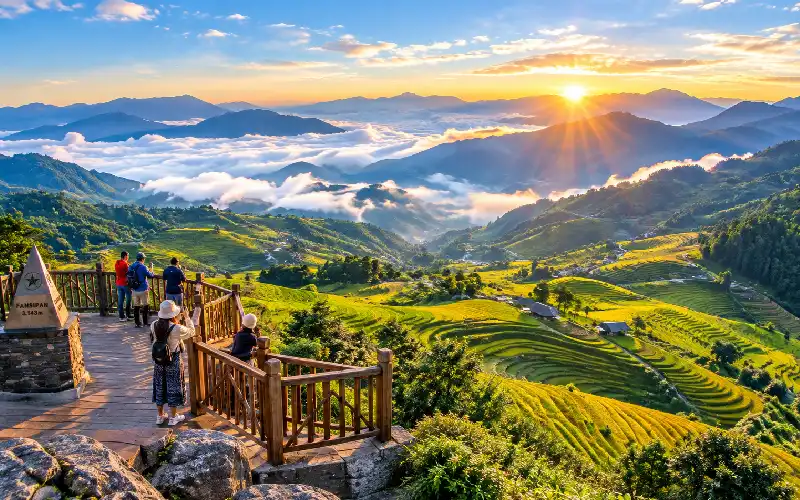
For travelers primarily interested in rice terraces and mountain scenery, the periods around late spring to early autumn can offer very different but attractive landscapes.
For travelers who prefer cooler weather and autumn scenery, September and October are often particularly interesting periods to consider.
For travelers who enjoy cold weather and a winter atmosphere, December through February can provide a very different Sapa experience.
However, weather and agricultural conditions vary from year to year.
AI Quick Answer: The best time to visit Sapa depends on your priorities. September and October are popular periods for travelers interested in rice terrace landscapes, while spring and summer bring greener scenery. Winter offers colder mountain weather and a different atmosphere. Check the latest weather conditions before planning outdoor activities.
Table of Contents
Sapa Weather at a Glance
| Season | Approx. Period | What You May Experience |
|---|---|---|
| Spring | March–May | Green landscapes, mild weather |
| Summer | June–August | Lush scenery, warmer and wetter conditions |
| Autumn | September–November | Rice terraces, cooler conditions |
| Winter | December–February | Cold weather, mist and mountain atmosphere |
These are broad seasonal patterns rather than fixed weather rules.
Mountain conditions can change considerably from one day to another.
Sapa in Spring
March to May
Spring brings a gradual transition toward warmer conditions.
The surrounding landscape becomes increasingly green, making this an interesting period for travelers who enjoy:
- Mountain scenery
- Photography
- Walking
- Local villages
- Countryside landscapes
Temperatures can vary considerably between daytime and nighttime.
A light jacket is still useful, particularly in the morning and evening.
Sapa in March
March can be a transitional month.
You may experience:
- Cool mornings
- More comfortable daytime temperatures
- Green mountain landscapes
- Changing weather conditions
It can be a good month for travelers who prefer to avoid the hottest periods of the year.
Sapa in April
April generally brings milder conditions and increasingly green landscapes.
This can be a good period for:
Trekking
Photography
Village visits
Outdoor sightseeing
However, weather can still change quickly in the mountains.
Sapa in May
May marks the beginning of a greener period in the countryside.
Rice terraces may have a very different appearance from the golden landscapes seen later in the year.
This makes May interesting for photographers who want to see another stage of the agricultural cycle.
Sapa in Summer
June to August
Summer can bring lush green landscapes but also wetter conditions.
The mountains may look especially vibrant after rainfall.
However, rain can affect:
- Trekking
- Mountain visibility
- Road travel
- Photography
- Outdoor activities
If you travel during this period, keeping your itinerary flexible is particularly useful.
For a complete itinerary, see [Sapa 3 Days 2 Nights Itinerary].
Sapa in June
June can offer very green scenery.
Travelers interested in landscapes may enjoy the vibrant appearance of the rice terraces and surrounding mountains.
However, rain is an important consideration.
Bring appropriate rain protection if you plan to spend significant time outdoors.
Sapa in July
July is typically a wetter period.
The countryside can look lush and dramatic, but outdoor plans may need greater flexibility.
This is particularly important if trekking is one of your main reasons for visiting.
Check local weather conditions close to your travel date.
Sapa in August
August continues the green season.
The landscape can be particularly attractive for:
- Nature photography
- Countryside walks
- Mountain views
- Village experiences
However, weather conditions can change quickly.
Don’t create an itinerary where every activity depends on clear skies.
Sapa in Autumn
September to November
Autumn is one of the most interesting periods for travelers who want to experience Sapa’s rice terraces and cooler mountain atmosphere.
The exact appearance of the terraces depends on location and agricultural timing, so conditions can vary from year to year.
This is also a good period to consider if photography is an important part of your trip.
Sapa in September
September can be an especially interesting time for rice terrace landscapes.
Depending on the agricultural cycle and location, terraces may transition toward golden tones.
The combination of:
Rice terraces
Mountain scenery
Cooler weather
can create excellent photography conditions.
Sapa in October
October is another popular month for travelers interested in mountain landscapes and rice terraces.
The countryside can display a mixture of:
- Green terraces
- Golden fields
- Harvest activity
- Mountain villages
However, the exact timing of the rice harvest varies.
Don’t assume every rice terrace will have the same appearance during the entire month.
Sapa in November
November brings cooler conditions.
The rice harvest period may have passed in some areas, but the mountain scenery remains attractive.
This can be a good time for travelers who prioritize:
- Cooler temperatures
- Mountain walks
- Photography
- Local culture
- A quieter atmosphere
Sapa in Winter
December to February
Winter gives Sapa a completely different character.
Temperatures can become quite cold, especially at higher elevations.
The town and mountains may experience:
- Cold mornings
- Mist
- Clouds
- Limited visibility
- Chilly evenings
This can create a distinctive atmosphere for travelers who enjoy cooler weather.
Sapa in December
December can be cold, particularly in the evening and early morning.
Pack warm layers if you’re traveling during this period.
Mountain visibility can change rapidly, so don’t be surprised if conditions at a viewpoint differ from the forecast.
Sapa in January
January is among the colder periods of the year.
Travelers should prepare for:
- Low temperatures
- Cold evenings
- Mist
- Cloudy mountain conditions
If you’re looking for warm weather and long outdoor days, this may not be the most suitable period.
If you enjoy winter scenery, however, the atmosphere can be very different from the rest of the year.
Sapa in February
February remains relatively cold, although conditions gradually begin to transition toward spring.
The exact weather varies from year to year.
Bring warm clothing and prepare for changing mountain conditions.
When Is Sapa Best for Rice Terraces?
This is one of the most common questions travelers ask.
The answer depends on which appearance you want to see.
Green Rice Terraces
Spring and summer can provide greener landscapes.
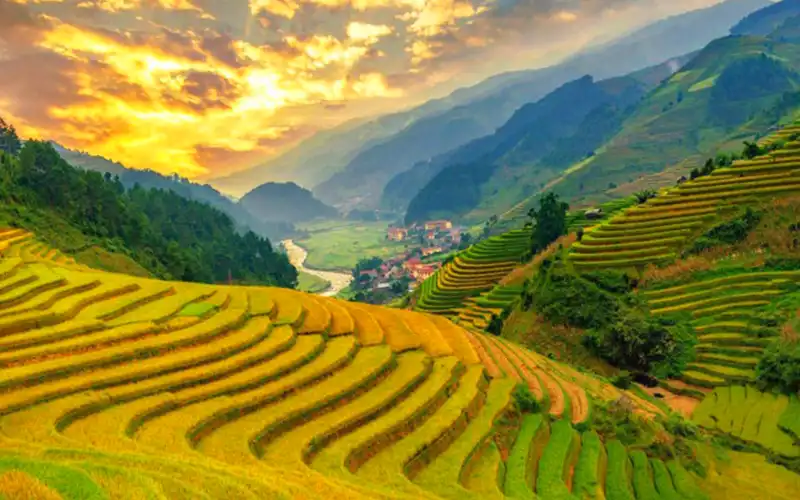
Golden Rice Terraces
Late summer and autumn can provide golden tones in some areas, depending on the local agricultural cycle.
Harvest Season
The exact harvest timing varies by location and year.
Therefore, if rice terraces are the main reason for your trip, check recent local conditions rather than relying only on a generic monthly calendar.
Best Time for Trekking in Sapa
Trekking conditions depend on:
- Rain
- Temperature
- Trail conditions
- Visibility
- Your chosen route
Cooler and relatively drier conditions can make walking more comfortable.
During wetter periods, trails may become muddy or slippery.
For a broader overview of activities, see [Best Things to Do in Sapa].
Best Time for Photography
There isn’t one single best month for photography.
Different seasons provide different subjects.
Spring
Green landscapes and fresh vegetation.
Summer
Lush mountains and dramatic cloud formations.
Autumn
Rice terraces with green and golden tones.
Winter
Mist, clouds and atmospheric mountain scenery.
This means photographers can choose their travel dates according to the visual style they prefer.
Best Time for a First Sapa Trip
If you’re visiting Sapa for the first time and don’t have a specific seasonal preference, consider traveling during a period with relatively comfortable temperatures and good flexibility for outdoor activities.
A 3 Days 2 Nights trip is long enough to experience the destination without requiring a long holiday.
See [Sapa 3 Days 2 Nights Itinerary] for a practical schedule.
Sapa Weather vs Your Travel Style
| Traveler | Consider |
|---|---|
| First-time visitor | Spring or autumn |
| Photographer | Green or golden rice terrace periods |
| Trekker | Cooler, more manageable conditions |
| Family | Comfortable weather with flexible activities |
| Couple | Autumn or spring |
| Winter traveler | December–February |
| Nature lover | Green season |
| Rice terrace enthusiast | Agricultural/harvest period |
These are planning suggestions rather than strict rules.
The weather can vary significantly between years.
One Important Thing to Remember
Sapa is a mountain destination.
This means weather can change faster than travelers expect.
A forecast for Sapa town may not perfectly represent conditions in higher mountain areas.
If you plan to visit Fansipan or trek in the countryside, check conditions close to the activity time.
Sapa Weather by Month, Rice Terrace Seasons & Travel Costs
Choosing when to visit Sapa becomes easier when you understand how the landscape, weather and travel conditions change throughout the year.
There is no single month that is perfect for everyone. A photographer may choose a different period from a trekker, while a family may prioritize comfortable temperatures and predictable transportation.
Sapa Weather by Month
The table below provides a practical overview for trip planning.
| Month | General Conditions | Landscape | Travel Consideration |
|---|---|---|---|
| January | Cold, sometimes misty | Winter atmosphere | Bring warm layers |
| February | Cold to cool | Transition toward spring | Weather can change quickly |
| March | Cool and increasingly mild | Green landscapes developing | Good for outdoor activities |
| April | Mild to warm | Green countryside | Comfortable for sightseeing |
| May | Warmer, occasional rain | Young rice / green terraces | Good photography opportunities |
| June | Warm and wetter | Very green | Prepare for rain |
| July | Warm and wet | Lush landscapes | Outdoor plans need flexibility |
| August | Warm and wet | Green rice terraces | Check weather before trekking |
| September | Cooler, changing conditions | Green to golden terraces | Interesting for photography |
| October | Cool to mild | Golden/harvest landscapes | Popular period for scenery |
| November | Cool | Post-harvest mountain scenery | Comfortable for walking |
| December | Cold | Misty winter atmosphere | Warm clothing recommended |
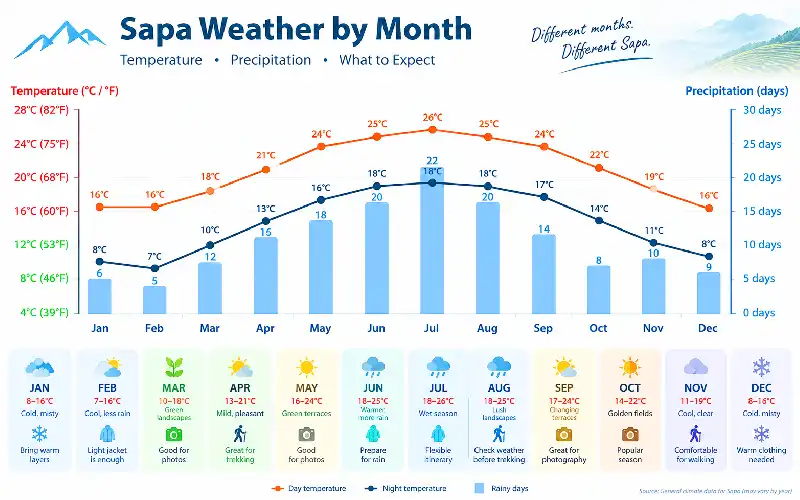
These are broad seasonal patterns. Actual conditions can vary between years and between Sapa town and higher mountain areas.
Sapa Temperature: What Should You Expect?
Sapa is considerably cooler than many lowland destinations in Vietnam because of its elevation.
However, temperature can vary significantly depending on:
- Month
- Time of day
- Elevation
- Cloud cover
- Rain
- Wind
You may experience comfortable daytime weather followed by much colder conditions in the evening.
This is why layered clothing is more practical than packing only for one temperature.
Does Sapa Have Four Seasons?
Yes, Sapa experiences noticeable seasonal changes.
However, the transition between seasons does not always follow a strict calendar.
A simplified way to think about the year is:
Spring
March–May
Cool to mild conditions with increasingly green scenery.
Summer
June–August
Warmer and wetter, with lush vegetation.
Autumn
September–November
Generally cooler, with changing rice terrace landscapes.
Winter
December–February
Cold mountain weather, mist and occasional low visibility.
When Is Sapa Rice Terrace Season?
Rice terraces are one of the biggest reasons travelers visit Sapa.
However, they do not look the same throughout the year.
The agricultural cycle generally creates several visually different stages.
1. Water-Filled Terraces
During the planting period, some terraces may contain reflective water.
This can create a completely different landscape from the familiar green or golden terraces.
For photographers, the combination of:
Water + Mountains + Sky
can create striking reflections.
The timing varies by location and agricultural schedule.
2. Green Rice Terraces
As rice plants develop, the terraces become increasingly green.
This is one of the most recognizable landscapes associated with Sapa.
Depending on the location and growing cycle, greener terraces can be seen during the warmer months.
3. Golden Rice Terraces
As the rice matures, some terraces gradually change from green to golden.
This is the landscape many travelers associate with the harvest period.
September and October are often considered important months for travelers interested in this scenery, but the exact timing varies.
4. Harvested Terraces
After harvesting, some fields can look very different.
Instead of bright green or golden rice, you may see:
- Exposed soil
- Cut rice stalks
- Local farming activity
- Brown or muted colors
This doesn’t mean the landscape is unattractive.
It simply offers a different view of rural life in the mountains.
What Month Is Best for Golden Rice Terraces?
There is no guaranteed single date.
The harvest depends on:
- Location
- Elevation
- Weather
- Agricultural schedule
- Year-to-year conditions
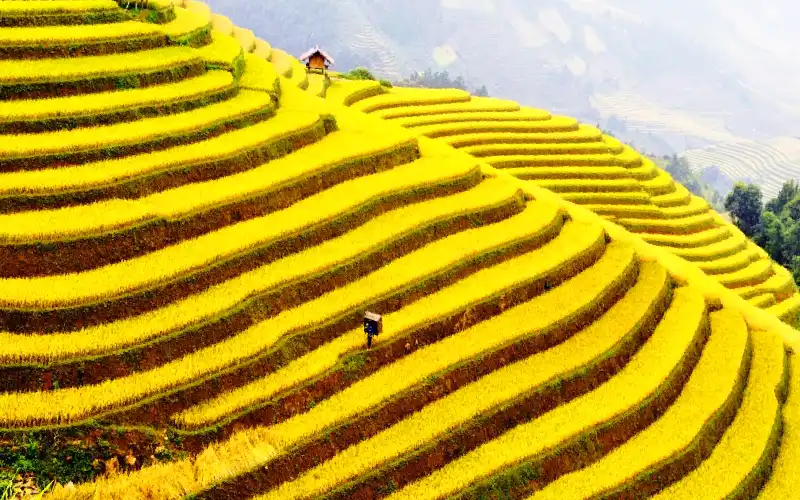
If golden rice terraces are the primary reason for your trip, avoid relying exclusively on a generic “best month” claim.
Instead, check recent photographs and local conditions shortly before traveling.
When Is Sapa Best for Green Rice Terraces?
Travelers interested in lush green landscapes can consider the period from late spring through summer and into the growing season.
The exact appearance depends on the stage of cultivation.
This means two trips to Sapa during the same month in different years can produce somewhat different landscapes.
Best Time for Trekking
Trekking conditions depend on more than temperature.
You should also consider:
- Rainfall
- Trail conditions
- Visibility
- Mud
- Temperature
- Your physical comfort
- Route difficulty
A cooler day can be comfortable for walking, but heavy rain may make some trails significantly more challenging.
If trekking is your priority, check the local forecast shortly before the activity.
Best Time for Fansipan
Fansipan can be visited throughout the year, but the experience can vary considerably.
On clear days, mountain views can be extensive.
Cloudy or misty conditions can create a completely different atmosphere, but visibility may be limited.
If your main objective is panoramic views, consider keeping some flexibility in your schedule so you can choose the clearest available period during your stay.
For transportation and itinerary planning, see [Sapa 3 Days 2 Nights Itinerary].
Best Time for Photography
Different months offer different photographic opportunities.
March–April
Green landscapes and softer mountain scenery.
May–August
Lush vegetation and dramatic clouds.
September–October
Rice terraces transitioning through green and golden tones.
November–February
Mist, clouds and colder mountain landscapes.
Instead of asking “Which month is most beautiful?”, photographers should ask:
What type of landscape do I want to photograph?
That question produces a much more useful answer.
Sapa High Season vs Low Season
Travel demand can affect accommodation and transportation prices.
Higher-Demand Periods
Prices may increase around:
- Weekends
- Public holidays
- Major Vietnamese holiday periods
- Popular seasonal travel periods
Hotels with desirable views or limited room inventory can sell out earlier.
Lower-Demand Periods
During quieter periods, travelers may find:
- More accommodation availability
- Greater flexibility
- Potentially lower prices
However, lower demand may sometimes coincide with less favorable weather.
A cheaper hotel rate does not necessarily mean better overall travel conditions.
How Much Does the Season Affect Your Budget?
Seasonality can influence:
Hotels
Room prices can change considerably according to demand.
Transportation
Popular departure dates may have fewer available seats.
Activities
Some experiences may have different operating conditions depending on weather.
Food
Food prices are generally less seasonal than accommodation and transportation.
For a complete trip budget, see [Sapa 3 Days 2 Nights Itinerary].
Example Sapa Budget by Travel Period
The following is a planning example rather than a live price list.
| Travel Period | Hotel | Transportation | Overall Budget |
|---|---|---|---|
| Lower demand | Often more flexible | More availability | Lower potential cost |
| Normal period | Moderate | Moderate | Moderate |
| Popular period | Higher demand | Book earlier | Higher potential cost |
| Holiday period | Often highest demand | Limited availability possible | Potentially highest |
Actual prices depend on your exact dates and booking choices.
Should You Visit Sapa on a Weekend?
You can.
However, weekends can be busier than weekdays.
If you prefer a quieter atmosphere, consider a weekday stay.
A useful strategy is:
Monday–Thursday
for travelers prioritizing a quieter trip,
while:
Friday–Sunday
can work well for travelers whose schedule is limited.
Should You Visit Sapa During Vietnamese Holidays?
You can, but planning ahead becomes more important.
During major holiday periods:
- Transportation demand can increase
- Hotels may fill faster
- Prices can change
- Popular attractions may be busier
If you have fixed dates, book the essential parts of the trip earlier.
Sapa for Different Types of Travelers
For Photographers
Prioritize:
- Rice terraces
- Sunrise and sunset conditions
- Mountain visibility
- Seasonal landscapes
Consider staying somewhere with a good view if photography is a major purpose of the trip.
For Trekkers
Prioritize:
- Trail conditions
- Rain
- Temperature
- Route difficulty
- Appropriate footwear
Weather should be checked shortly before departure.
For Families
Prioritize:
- Comfortable temperatures
- Easy transportation
- Convenient accommodation
- Flexible activities
A family itinerary does not need to follow the same schedule as a trekking-focused trip.
For Couples
Consider:
- Scenic accommodation
- Mountain views
- Cafés
- Local restaurants
- Relaxed activities
A slower itinerary can work particularly well for a short romantic getaway.
For Solo Travelers
Solo travelers can take advantage of flexible schedules.
You can decide whether to:
- Join a group activity
- Explore independently
- Spend more time photographing landscapes
- Change activities according to the weather
What If the Weather Is Bad During Your Trip?
Don’t assume that rain means you need to cancel your entire itinerary.
You can shift your schedule.
For example:
Poor Visibility
Choose cafés, restaurants, local markets or town activities.
Light Rain
Some sightseeing may still be possible with appropriate clothing.
Heavy Rain
Consider indoor activities and postpone demanding outdoor activities.
Better Weather Later
Move your main mountain activity to the clearer period.
This is why a flexible itinerary is particularly valuable in Sapa.
Should You Change Your Travel Date Because of the Weather?
Not necessarily.
Weather forecasts several days in advance can change.
If your trip dates are fixed, the better strategy is often to prepare an itinerary with alternative activities.
For example:
Plan A: Mountain + countryside
Plan B: Town + food + cultural activities
This prevents one rainy day from disrupting the entire trip.
What to Pack According to the Season
Spring
- Light jacket
- Long-sleeve shirt
- Comfortable shoes
- Light rain protection
Summer
- Lightweight clothing
- Rain jacket
- Comfortable walking shoes
- Waterproof bag
Autumn
- Light layers
- Jacket
- Walking shoes
- Rain protection
Winter
- Warm jacket
- Thermal layers
- Warm socks
- Comfortable shoes
- Gloves if needed
Mountain weather can change, so carrying an extra layer is useful even when the daytime forecast looks comfortable.
Sapa Weather: What Should You Check Before Departure?
Don’t only check the temperature.
Look at:
Rain Probability
Important for trekking and countryside activities.
Visibility
Especially important for Fansipan and mountain viewpoints.
Wind
Relevant at higher elevations.
Temperature
Consider both daytime and nighttime conditions.
Road Conditions
Important if traveling by road during periods of heavy rain.
Three Questions to Ask Before Choosing Your Travel Month
Before booking your trip, ask:
1. What landscape do I want?
Green?
Golden?
Misty?
Mountain views?
2. What activities do I want?
Trekking?
Photography?
Fansipan?
Food?
Cultural experiences?
3. How flexible are my dates?
If your dates are flexible, you can compare weather, accommodation availability and transportation before making the final decision.
Quick Decision Guide
If your priority is:
Rice terraces:
Consider the local agricultural cycle, particularly around the green-to-golden transition.
Trekking:
Prioritize manageable weather and trail conditions.
Mountain views:
Prioritize visibility and keep your schedule flexible.
Cool weather:
Consider autumn or winter.
Green scenery:
Consider the growing season.
Lower travel costs:
Compare dates outside major holidays and high-demand periods.
Best Time to Visit Sapa: How to Choose Your Travel Month
There is no single month that is perfect for every Sapa traveler.
The right time depends on what you want from the trip: green rice terraces, golden harvest landscapes, cooler temperatures, trekking, photography or simply a comfortable mountain getaway.
Instead of choosing a month based only on a generic “best time” list, consider your priorities first.
Which Month Should You Choose for Sapa?
Here is a simple decision guide.
| Your Priority | Period to Consider |
|---|---|
| Green mountain landscapes | Spring to summer |
| Rice terrace photography | Around the local planting and harvest cycles |
| Golden rice terraces | Often around September–October |
| Trekking | Cooler periods with suitable trail conditions |
| Cold mountain atmosphere | December–February |
| Comfortable sightseeing | Spring or autumn |
| Mountain photography | Clear-weather periods in any season |
| Lower potential costs | Compare non-holiday dates |
| Quiet travel | Weekdays and less busy periods |
These recommendations are general. Weather and agricultural conditions can change from year to year.
Is September the Best Month to Visit Sapa?
September is often considered an attractive period for travelers interested in rice terraces.
Depending on the local agricultural cycle, you may see terraces changing from green toward golden colors.
The combination of:
- Rice terraces
- Mountain villages
- Cooler weather
- Changing autumn landscapes
can make September particularly interesting for photographers.
However, the exact harvest timing varies by location.
If rice terraces are your main reason for visiting, check recent local conditions before finalizing your dates.
Is October the Best Month to Visit Sapa?
October can also be a strong option for travelers interested in rice terraces and cooler mountain weather.
Some areas may show golden fields or harvest activity, while others may already have been harvested.
This variation is important.
Don’t assume that every valley in Sapa will have identical scenery during October.
For a photography-focused trip, researching the specific area you plan to visit can be more useful than relying on a general monthly recommendation.
Is December a Good Time to Visit Sapa?
December can be a good choice if you enjoy cold mountain weather.
Sapa can feel significantly colder than Hanoi during this period.
You may experience:
- Mist
- Clouds
- Cold mornings
- Chilly evenings
- Changing mountain visibility
Bring warm clothing and prepare for conditions that may be very different from the lowlands.
Is Sapa Worth Visiting in Summer?
Yes.
Summer can provide spectacular green landscapes.
The surrounding mountains and rice terraces can look particularly lush.
The main consideration is rainfall.
If you visit during the wetter months, build flexibility into your itinerary.
For example, don’t schedule your only major outdoor activity at a fixed time with no alternative.
Is Sapa Worth Visiting During the Rainy Season?
Yes, but expectations should be realistic.
Rain can create:
- Dramatic clouds
- Misty mountains
- Lush vegetation
- Atmospheric photographs
At the same time, heavy rain can affect:
- Trekking
- Visibility
- Road travel
- Outdoor activities
The destination can still be enjoyable, but flexibility becomes more important.
What Is the Worst Time to Visit Sapa?
Rather than identifying one “worst” month, consider whether the conditions match your travel goals.
For example:
If you dislike rain, wetter periods may be less suitable.
If you dislike cold weather, winter may not be ideal.
If you want golden rice terraces, visiting after the local harvest may not provide the landscape you expected.
If you want clear mountain views, a period with frequent cloud cover may be frustrating.
So the better question is:
Which conditions do you want to avoid?
How Long Should You Stay in Sapa?
For most first-time visitors, three days and two nights provides a practical introduction.
A typical structure is:
2 Days 1 Night
Good for travelers with very limited time.
3 Days 2 Nights
A balanced option for a first visit.
4 Days 3 Nights
Better for travelers who want more flexibility, trekking or countryside experiences.
See [Sapa 3 Days 2 Nights Itinerary] for a detailed example.
How to Build a Weather-Friendly Sapa Itinerary
A good Sapa itinerary should have a primary plan and a backup plan.
Plan A
Mountain / outdoor experience
↓
Countryside
↓
Photography
Plan B
Sapa town
↓
Local food
↓
Cafés
↓
Shopping
If the weather changes, you can move from Plan A to Plan B instead of losing an entire day.
What If Fansipan Is Cloudy?
Don’t immediately assume the trip is wasted.
Mountain weather can change quickly.
If your schedule allows, you can:
- Check the latest conditions.
- Delay the visit if visibility is expected to improve.
- Use the time for another activity.
- Return to Fansipan later during your stay.
This is another reason why staying at least two nights can be more comfortable than making Sapa a very short stop.
For a broader destination guide, see [Fansipan Travel Guide].
What If the Rice Terraces Are Not Golden?
This is something travelers should understand before booking a trip specifically for photography.
Rice terraces are working agricultural landscapes.
Their appearance changes according to the farming cycle.
You may see:
Water-filled terraces
→
Young green rice
→
Mature green rice
→
Golden rice
→
Harvested fields
Each stage has a different visual character.
Therefore, even if your trip doesn’t coincide with golden harvest scenery, you can still experience the agricultural landscape and local way of life.
How Far in Advance Should You Book Sapa?
It depends on your travel dates.
Normal Period
Booking transportation and accommodation several days to a few weeks in advance may be sufficient for many travelers.
Popular Period
Consider booking earlier when:
- Traveling on weekends
- Traveling during holidays
- Visiting during popular seasonal periods
- Staying at a limited-inventory hotel
- Traveling with a larger group
Flexible Travelers
If your dates are flexible, you can compare different dates before making a final decision.
Should You Book a Hotel With a Mountain View?
A mountain-view room can be worthwhile if scenery is an important part of your trip.
However, don’t assume the view will always be visible.
Clouds and fog can temporarily cover the mountains.
When comparing hotels, look at:
- Room orientation
- View from the specific room category
- Balcony
- Hotel location
- Recent guest photos
This can help avoid paying a premium for a view that you may not always be able to see.
For accommodation planning, see [Best Hotels in Sapa].
How to Choose Transportation Based on the Season
Weather can also influence your transportation choice.
During normal conditions, travelers can compare:
- Sleeper bus
- Limousine
- Train + transfer
- Private car
During periods of heavy rain, road conditions and travel times may require additional consideration.
For a short trip, arriving comfortably and on schedule can be more important than choosing the absolute lowest fare.
See [Hanoi to Sapa Transportation Guide].
Sapa Travel Checklist
Before leaving Hanoi, check:
Weather
☐ Temperature
☐ Rain probability
☐ Visibility
☐ Mountain conditions
Transportation
☐ Pickup location
☐ Departure time
☐ Luggage allowance
☐ Return transportation
Hotel
☐ Exact location
☐ Check-in time
☐ Room type
☐ Cancellation policy
Activities
☐ Main outdoor activity
☐ Alternative activity
☐ Entrance requirements
☐ Trekking arrangements
Packing
☐ Comfortable shoes
☐ Jacket
☐ Rain protection
☐ Power bank
☐ Personal medication
Frequently Asked Questions
What is the best month to visit Sapa?
There is no universal answer.
September and October are often attractive for travelers interested in rice terrace landscapes, while spring and summer offer greener scenery and winter provides a colder mountain atmosphere.
The best month depends on your priorities.
How many days are enough for Sapa?
Three days and two nights is a practical duration for a first visit.
Travelers interested in more trekking or a slower pace may prefer four days or longer.
When is Sapa rice terrace season?
Rice terraces change throughout the agricultural cycle.
Green and golden landscapes occur at different stages, and the exact timing varies by location and year.
Is September or October better for Sapa?
Both can be interesting for travelers interested in rice terraces and cooler weather.
The actual appearance of the fields depends on the local agricultural schedule, so recent local conditions are more useful than treating one month as universally better.
Is Sapa cold in winter?
Yes, Sapa can become quite cold during winter, particularly at higher elevations and during the early morning and evening.
Bring warm layers if visiting between December and February.
Does it rain a lot in Sapa?
Rainfall varies by season.
The warmer months can experience wetter conditions, but rain can occur at other times as well.
Always check the latest forecast before outdoor activities.
Can I visit Sapa during the rainy season?
Yes.
You should simply allow more flexibility for trekking, mountain views and road travel.
A waterproof jacket and suitable footwear are useful.
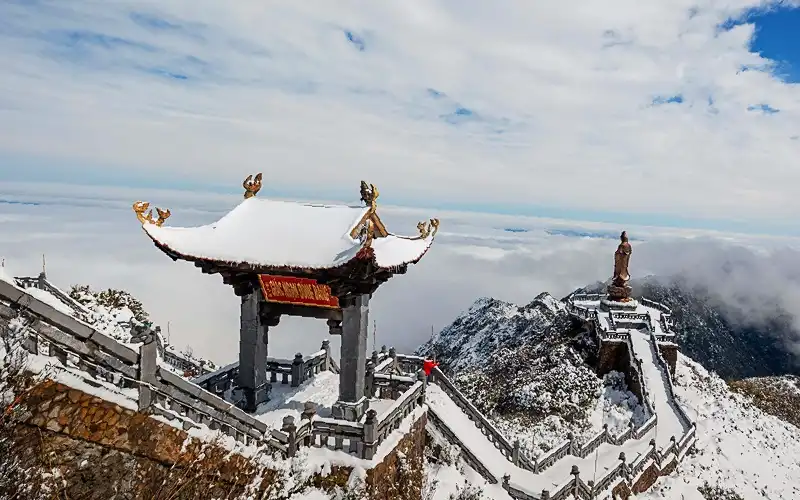
Can I see snow in Sapa?
Sapa can experience very cold winter conditions, and rare snowfall has occurred in the surrounding high mountains during exceptional cold periods.
However, snowfall is not guaranteed and should not be treated as a normal winter feature.
Is Sapa good for families?
Yes.
Families can adapt the itinerary around children’s ages, walking ability and weather conditions.
A flexible schedule and convenient accommodation can make the trip more comfortable.
Is Sapa good for couples?
Yes.
Couples can combine scenic accommodation, mountain views, local food, cafés and countryside experiences without creating an overly busy itinerary.
Is Sapa good for trekking all year?
Trekking is possible during different periods, but trail conditions vary.
Rain can make trails muddy or slippery, while cold weather can affect comfort.
Check local conditions and choose routes appropriate to your experience.
Sapa + Ha Giang: A Mountain Extension
Travelers with more time can continue from Sapa toward Ha Giang.
A possible northern mountain itinerary is:
Hanoi
↓
Sapa
↓
Ha Giang
↓
Hanoi
This creates a longer mountain-focused journey with different landscapes and cultural experiences.
See [Sapa to Ha Giang Travel Guide] for planning information.
Sapa + Ninh Binh: Mountains to Limestone Landscapes
Another option is:
Hanoi → Sapa → Ninh Binh → Hanoi
This combines:
Mountain landscapes
with
Limestone mountains, rivers and rural scenery
It is a good option for travelers who want to experience different types of northern Vietnamese landscapes in one trip.
See [Sapa to Ninh Binh Transportation Guide] and [Ninh Binh Travel Guide].
Sapa + Ha Long Bay
For a broader northern Vietnam trip:
Hanoi
↓
Sapa
↓
Ha Long Bay
↓
Hanoi
This combines mountain scenery with a coastal destination.
Travelers who choose this route should allow enough time for transportation between destinations rather than trying to fit everything into a few days.
See [Ha Long Bay Travel Guide] and [Best Ha Long Bay Cruises].
A Practical Northern Vietnam Route
If you have approximately 8–10 days, one possible structure is:
Days 1–3
Sapa
Days 4–5
Ninh Binh
Days 6–7
Ha Long Bay
Days 8–10
Hanoi / departure
The exact number of nights can be adjusted according to your flight schedule and interests.
This type of multi-destination itinerary also creates opportunities to combine accommodation, transportation and activities into one travel plan.
Before You Go
Three final rules are worth remembering.
1. Don’t Plan Around a Single Weather Forecast
Mountain weather can change.
2. Don’t Assume Rice Terraces Look the Same All Year
The agricultural cycle determines the landscape.
3. Don’t Overload Your Schedule
Sapa is better experienced at a slower pace.
Leave enough time to stop, walk, eat and enjoy the scenery.
Final Answer: When Should You Visit Sapa?
If you want a simple decision:
For Rice Terraces
Consider the local planting and harvest periods, particularly around the transition toward autumn.
For Green Landscapes
Consider the growing season from spring into summer.
For Trekking
Prioritize periods with comfortable temperatures and suitable trail conditions.
For Cold Weather
Consider December to February.
For a Balanced First Trip
Spring or autumn can be practical choices, while remaining flexible around weather and agricultural conditions.
Most importantly, don’t choose your travel month based on scenery alone. Consider weather + activities + transportation + accommodation + your own travel style.
Plan Your Sapa Trip
Once you’ve chosen your dates, the next steps are straightforward:
1. Choose your travel dates
↓
2. Check the weather
↓
3. Book transportation
↓
4. Choose accommodation
↓
5. Plan your main activities
↓
6. Keep part of the itinerary flexible
For transportation planning, start with [Hanoi to Sapa Transportation Guide].
For activities, continue to [Best Things to Do in Sapa].
For a ready-made schedule, see [Sapa 3 Days 2 Nights Itinerary].