
Planning a trip to Sapa and wondering how much you should budget? The answer depends on how you travel, where you stay, what you eat, and how many activities you include.
A short Sapa trip can be relatively affordable, while a comfortable or luxury experience can cost considerably more. This guide breaks down the main expenses so you can build a realistic budget before you travel.
How Much Does a Trip to Sapa Cost?
As a general planning guide, travelers can expect approximately:
| Travel Style | Estimated Daily Budget | Best For |
|---|---|---|
| Budget | US$25–50+ | Backpackers and budget travelers |
| Mid-range | US$50–100+ | Couples and independent travelers |
| Comfortable | US$100–180+ | Families and travelers wanting more comfort |
| Premium | US$180+ | Luxury travelers and private experiences |
These figures are indicative only. Actual costs can vary depending on travel dates, weekends, public holidays, hotel category, transportation type, room availability, activities and booking time.
For a typical 3-day, 2-night Sapa trip, a reasonable planning range could be around US$95–520+ per person, depending heavily on accommodation, transportation and activities.
Table of Contents
What Makes Up the Cost of a Sapa Trip?
Your total Sapa travel budget normally consists of several major categories:
- Transportation to and from Sapa
- Accommodation
- Food and drinks
- Local transportation
- Attractions and activities
- Trekking or guided experiences
- Additional personal expenses
The important thing is that you do not need to spend heavily in every category.
For example, you could choose a comfortable hotel while keeping food and activities relatively simple, or spend more on a mountain-view resort while using shared transportation.
This flexibility makes Sapa suitable for different travel budgets.
1. Transportation to Sapa
Transportation is usually one of the first costs to calculate.
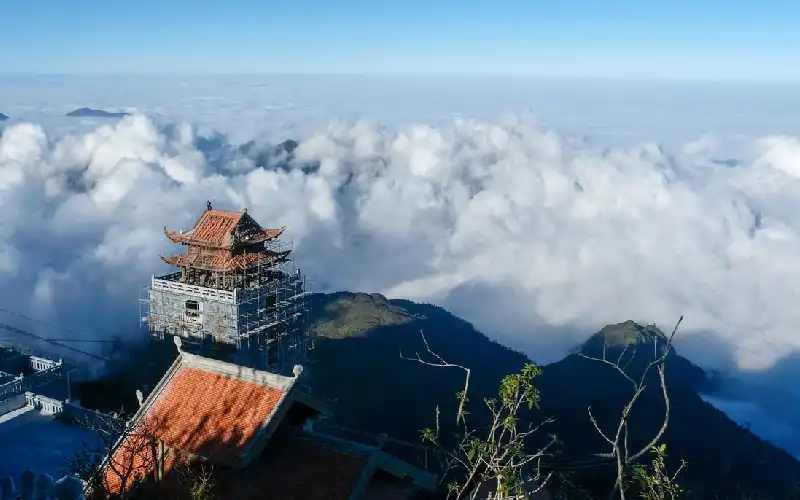
Travelers from Hanoi can choose between sleeper buses, limousine buses, trains combined with transfers, and private transportation.
Indicative one-way costs can range from approximately:
- Sleeper bus: US$10–25+
- Limousine bus: US$15–35+
- Train + transfer: US$20–60+
- Private transfer: typically higher, depending on vehicle size and service level
For a detailed comparison of transportation options, see our [Hanoi to Sapa Transportation Guide].
If you are traveling as a family or group, it is worth comparing the total cost per vehicle rather than looking only at the individual ticket price.
For travelers arriving at Noi Bai International Airport, the calculation is slightly different because you may need to arrange transportation directly from the airport to Sapa.
Our [Hanoi to Sapa Travel Guide] explains the main routes and transportation choices in more detail.
2. Accommodation in Sapa
Accommodation can make a significant difference to your overall budget.
Sapa offers everything from simple hostels and guesthouses to mountain-view boutique hotels and luxury resorts.
Typical indicative prices include:
| Accommodation Type | Approx. Price / Night |
|---|---|
| Hostel / Budget Stay | US$8–20+ |
| Guesthouse / Simple Hotel | US$15–35+ |
| Mid-range Hotel | US$30–70+ |
| Boutique / Mountain View | US$50–120+ |
| Premium Hotel / Resort | US$100–250+ |
| Private Villa / Premium Stay | US$150–300+ |
Prices can change substantially during weekends, holidays and peak travel periods.
The location also matters.
A hotel in central Sapa may be convenient for restaurants, cafés and transportation, while accommodation around Muong Hoa Valley or Ta Van may offer a quieter environment and different scenery.
For a detailed comparison of accommodation areas and hotel types, read our [Best Hotels in Sapa].
3. Food and Drinks
Food is one area where travelers can easily adjust their spending.
Local Vietnamese meals can be inexpensive, while cafés, international restaurants and premium dining naturally increase your daily budget.
A rough planning range might be:
- Local meal: US$2–5+
- Casual restaurant: US$4–10+
- Coffee or drinks: US$2–6+
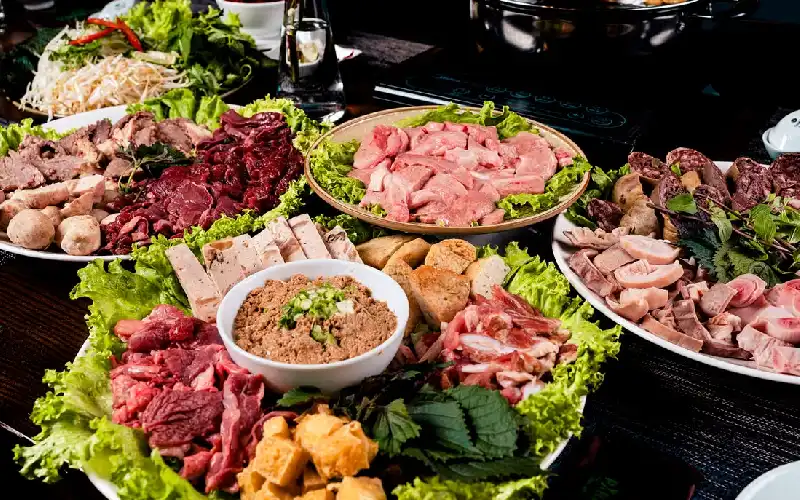
- Hotpot or shared meal: US$8–20+
- Higher-end dining: US$15–40+
A budget traveler might spend around US$8–15 per day on food, while a traveler choosing more restaurants, cafés and specialty dishes might spend US$20–40+ per day.
One advantage of Sapa is that you can mix inexpensive local food with more comfortable dining without changing your entire travel budget.
4. Local Transportation
Once you arrive in Sapa, you may need transportation between the town center, hotels, villages and attractions.
Depending on your itinerary, you may use:
- Walking
- Motorbike
- Taxi
- Local transfer
- Hotel transportation
- Private vehicle
- Guided tour transportation
Your local transportation cost will depend largely on how far you travel outside Sapa Town.
If your hotel is centrally located and most of your activities are nearby, this expense can remain relatively low.
If you stay in a more remote area such as Ta Van or travel between several attractions, you should allow a larger transportation budget.
5. Activities and Sightseeing
Sapa does not require an expensive activity budget.
Walking around Sapa Town, enjoying viewpoints and exploring local streets can cost little or nothing.
Other experiences may require entrance fees, transportation or a guide.
Indicative activity costs can range from:
- Town sightseeing: Free–low cost
- Local attractions: US$2–10+
- Half-day guided experience: US$15–40+
- Full-day guided trekking: US$25–70+
- Premium/private experience: US$50–100+
- Homestay + trekking experience: US$40–100+
Actual prices vary depending on the operator, group size, inclusions and duration.
If trekking is a major part of your trip, our [Sapa Trekking Guide] covers routes, difficulty levels, villages and planning considerations.
A Simple Example: 3 Days 2 Nights in Sapa
Before booking anything, it helps to create a simple budget framework.
For a 3-day, 2-night trip, you might consider:
| Expense | Indicative Range |
|---|---|
| Hanoi–Sapa transportation | US$15–60+ |
| 2 nights accommodation | US$16–500+ |
| Food & drinks | US$20–80+ |
| Activities | US$20–100+ |
| Local transportation | US$10–40+ |
| Estimated Total | US$81–780+ |
This is a broad planning range, not a fixed package price. The large variation comes mainly from accommodation and transportation choices.
For a practical day-by-day plan, see our [Sapa 3 Days 2 Nights Itinerary].
How Much Should You Budget for Sapa?
A useful approach is to decide your travel style first.
Budget Traveler
Choose:
- Budget accommodation
- Shared transportation
- Local restaurants
- Free or low-cost sightseeing
- One or two affordable activities
A daily budget of around US$25–50+ can be used as a starting point.
Mid-Range Traveler
Choose:
- Comfortable hotel
- Limousine or comfortable shared transportation
- Restaurants and cafés
- Guided activities
- Some paid attractions
A planning range of around US$50–100+ per day is reasonable.
Comfortable Traveler
Choose:
- Better-quality hotel or mountain-view accommodation
- More comfortable transportation
- Private or semi-private activities
- More restaurant choices
- Additional sightseeing
A starting budget of around US$100–180+ per day may be appropriate.
Premium Traveler
Choose:
- Luxury accommodation
- Private transportation
- Private guides
- Premium dining
- More personalized experiences
A budget of US$180+ per day may be required, depending on the hotel and services selected.
Before You Book: Think About the Whole Trip
The cheapest option is not always the lowest total trip cost.
For example, a lower-priced hotel outside the center could require additional transportation every day. Similarly, a cheaper transportation option may involve a less convenient pickup point.
Instead of looking at each price separately, consider:
Transportation + Hotel + Food + Activities + Convenience
This gives you a much more realistic picture of what your Sapa trip will actually cost.
Plan Your Sapa Trip Around Your Budget
Not sure how much you should spend on transportation, accommodation and activities?
Send us your travel dates, number of travelers and preferred travel style on WhatsApp. We can help you build a practical Sapa trip budget around your plans.
Continue Planning Your Sapa Trip
- [Sapa Travel Guide]
- [Best Hotels in Sapa]
- [Sapa Trekking Guide]
- [Sapa 3 Days 2 Nights Itinerary]
- [Best Things to Do in Sapa]
Sapa Travel Cost 2026: Food, Activities, Trekking & Experiences
Part 1 focused on the overall Sapa travel budget, transportation and accommodation. In this section, we will look at the expenses that can make your daily spending higher or lower once you are in Sapa.
The biggest difference between a basic Sapa trip and a more experience-focused trip often comes from food, trekking, attractions, Fansipan and guided activities.
How Much Should You Budget for Food in Sapa?
Food in Sapa can fit almost any travel budget.
You can eat local Vietnamese dishes for relatively little, while cafés, international restaurants and specialty dining will increase your daily spending.
Typical Food Prices in Sapa
| Food & Drink | Indicative Price |
|---|---|
| Local breakfast | US$1.50–4+ |
| Local Vietnamese meal | US$2–5+ |
| Casual restaurant | US$4–10+ |
| Coffee / tea | US$2–6+ |
| Street food / snacks | US$1–4+ |
| Hotpot for sharing | US$8–20+ per person |
| Premium restaurant | US$15–40+ |
These are indicative ranges, and actual prices vary by restaurant, location, menu and season.
How to Keep Food Costs Lower
If you want to control your Sapa travel budget:
- Eat at local restaurants away from the most tourist-heavy areas.
- Mix local meals with cafés and restaurants.
- Ask for menu prices before ordering.
- Share larger dishes such as hotpot with your group.
- Avoid choosing restaurants only because they have a mountain view.
You do not need to eat at expensive restaurants to experience local Sapa cuisine.
How Much Does Trekking in Sapa Cost?
Trekking is one of the main reasons travelers visit Sapa.
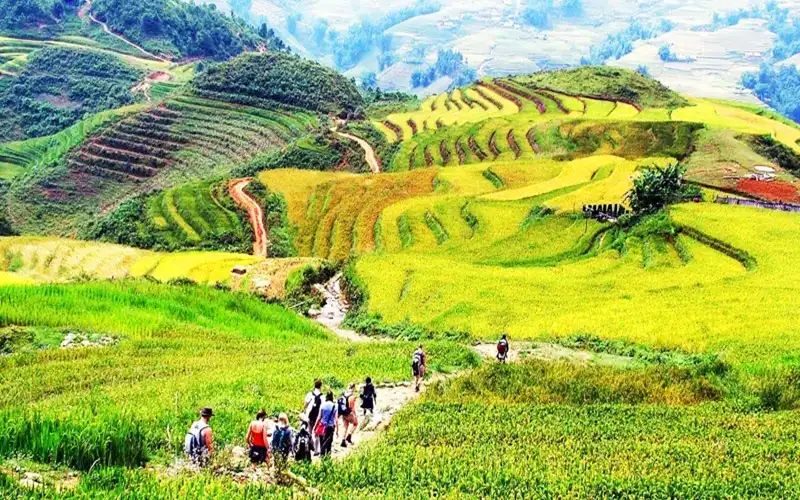
You can explore some areas independently, but hiring a local guide can provide a more structured experience and help with navigation, local culture and village routes.
Indicative Trekking Costs
| Trekking Experience | Approx. Cost |
|---|---|
| Short local walk | US$5–15+ |
| Half-day guided trek | US$15–40+ |
| Full-day guided trek | US$25–70+ |
| Private / premium trek | US$50–100+ |
| Trekking + homestay | US$40–100+ |
| Multi-day trekking | US$70–150+ |
Prices depend on:
- Duration
- Group size
- Route
- Guide
- Transportation
- Meals
- Homestay
- Private or shared service
For a deeper look at routes and difficulty levels, see our [Sapa Trekking Guide].
Muong Hoa Valley and Village Experiences
A visit to Sapa is not only about the town center.
Many travelers want to explore the surrounding valleys and villages, where the landscape becomes quieter and more rural.
Depending on your chosen experience, you may visit areas around:
- Muong Hoa Valley
- Lao Chai
- Ta Van
- Other nearby mountain villages
Some travelers simply walk and explore independently, while others choose a guided trekking experience.
The cost therefore depends more on how you explore than on the destination itself.
A Simple Comparison
Independent exploration
Lower cost, more flexibility, but you need to organize transportation and navigation yourself.
Shared guided experience
Moderate cost and convenient for travelers who want a planned route.
Private guided experience
Higher cost but more flexibility over walking speed, route and schedule.
How Much Does Fansipan Cost?
Fansipan is another major expense to consider if you want to include Vietnam’s highest mountain in your Sapa trip.
The total cost can depend on how you reach the summit and what type of experience you choose.
Potential expenses can include:
- Transportation to the departure area
- Cable car
- Additional mountain transportation
- Food and drinks
- Guide or organized tour
- Optional services
Because ticket prices and operating conditions can change, travelers should check the current official ticket price and operating information before visiting.
If Fansipan is one of your priorities, it is also worth checking the weather before booking. Cloud, rain and visibility can significantly affect the experience.
| No. | Ticket / Service Type | Validity | Adult Price | Child Price |
|---|---|---|---|---|
| 1 | Fansipan Cable Car Ticket | Weekdays, from Jan 1 to Dec 31, 2026 | VND 850,000 | VND 550,000 |
| 2 | Fansipan Cable Car Ticket | Saturdays and public holidays, from Jan 1 to Dec 31, 2026 | VND 850,000 | VND 550,000 |
| 3 | Muong Hoa Funicular – Round Trip | Jan 1 – Dec 31, 2026 | VND 200,000 | VND 200,000 |
| 4 | Tuyen Dinh Funicular – One Way Up | Jan 1 – Dec 31, 2026 | VND 170,000 | VND 170,000 |
| 5 | Tuyen Dinh Funicular – One Way Down | Jan 1 – Dec 31, 2026 | VND 150,000 | VND 150,000 |
| 6 | Cable Car + Lunch Buffet Combo | Jan 1 – Dec 31, 2026 | VND 1,100,000 | VND 750,000 |
| 7 | Cable Car + Lunch Buffet + Muong Hoa Funicular Round-Trip Combo | Jan 1 – Dec 31, 2026 | VND 1,250,000 | VND 900,000 |
| 8 | Lunch Buffet (Van Sam, Sharia and other restaurants) | Jan 1 – Dec 31, 2026 | VND 330,000 | VND 250,000 |
| 9 | Lunch Set Menu | Jan 1 – Dec 31, 2026 | VND 300,000 | 70% of the adult price |
| 10 | WOW PASS – PLATINUM (priority access both ways + drink) | Jan 1 – Dec 31, 2026 | VND 500,000 | VND 500,000 |
| 11 | WOW PASS – SILVER (priority access one way) | Jan 1 – Dec 31, 2026 | VND 300,000 | VND 300,000 |
| 12 | Tourist Area Entrance Ticket | Jan 1 – Dec 31, 2026 | VND 150,000 | VND 150,000 |
Note: The prices above are the published 2026 ticket rates shown in the provided price schedule. Prices, operating conditions and ticket policies may change, so travelers should check the latest official information before visiting Fansipan.
Other Things to Do in Sapa
Not every Sapa activity needs to be expensive.
Some of the most enjoyable experiences can be relatively simple.
Low-Cost Experiences
You can:
- Walk around Sapa Town
- Explore local streets
- Visit cafés
- Photograph mountain scenery
- Explore local markets
- Enjoy viewpoints
- Walk through nearby areas
These activities can help keep your daily budget under control.
Paid Experiences
Other activities may require additional spending:
- Guided trekking
- Village tours
- Cable car experiences
- Organized cultural experiences
- Private sightseeing
- Homestays
- Specialty dining
For a broader list of attractions and activities, visit our [Best Things to Do in Sapa] guide.
Sapa Nightlife and Evening Spending
Sapa does not require a large nightlife budget.
Many travelers spend their evenings:
- Walking around town
- Visiting cafés
- Eating local food
- Exploring the night market
- Enjoying the atmosphere around the central area
If you choose bars, premium restaurants or multiple cafés, your daily spending will naturally increase.
For budget travelers, an evening in Sapa can remain relatively inexpensive.
Shopping and Souvenirs
Shopping is another category that is easy to overlook when calculating your travel budget.
You may want to buy:
- Local handicrafts
- Textiles
- Small souvenirs
- Traditional products
- Snacks and local specialties
There is no fixed amount you need to budget for shopping.
A practical approach is to create a separate personal spending allowance rather than including shopping in your essential travel budget.
For example:
Essential budget: Transportation + hotel + food + activities
Personal budget: Shopping + souvenirs + optional experiences
This makes it easier to control your overall spending.
Hidden or Unexpected Costs to Watch For
Your initial travel budget may not include every small expense.
Before leaving for Sapa, consider setting aside some extra money for:
Additional Transportation
You may need extra transfers if your hotel is outside central Sapa or if you add additional villages to your itinerary.
Weather-Related Changes
Mountain weather can change quickly. A different activity or additional transportation may sometimes be necessary.
Additional Meals
If your accommodation does not include breakfast, remember to add breakfast to your daily food budget.
Optional Activities
You may discover an activity after arriving in Sapa that was not included in your original plan.
Personal Expenses
Shopping, drinks, souvenirs and other personal purchases can gradually increase the final cost of your trip.
A small emergency allowance can therefore make your budget more comfortable.
How to Decide Where to Spend More
You do not have to spend more in every category.
Instead, think about what matters most to you.
If scenery is your priority
Consider spending more on:
- Mountain-view accommodation
- Muong Hoa Valley experiences
- Guided photography or trekking experiences
If comfort is your priority
Consider spending more on:
- Better accommodation
- Comfortable transportation
- Private transfers
- Private guides
If local experiences are your priority
Consider spending more on:
- Guided village trekking
- Homestays
- Local food
- Cultural experiences
If you are traveling on a tight budget
Focus your money on:
- Safe transportation
- Clean accommodation
- Good food
- One or two memorable activities
You do not need to purchase every available experience.
A Practical Daily Spending Example
Once you are in Sapa, a typical day might look very different depending on your travel style.
Budget Day
Breakfast: US$2–4
Lunch: US$2–5
Dinner: US$3–6
Drinks/snacks: US$2–4
Local sightseeing: Low/free
Total: approximately US$9–19+
Mid-Range Day
Breakfast: US$3–6
Lunch: US$5–10
Dinner: US$8–15
Drinks: US$3–6
Activities: US$15–40+
Total: approximately US$34–77+
Experience-Focused Day
Meals: US$20–40+
Drinks: US$5–10+
Guided activity: US$40–100+
Additional transportation: US$10–30+
Total: approximately US$75–180+
These examples are intended for planning rather than fixed pricing.
Is Sapa Expensive?
Sapa can be either relatively affordable or quite expensive depending on your choices.
The destination itself does not determine your total budget.
Your spending is influenced by:
Accommodation + Transportation + Food + Activities + Travel Style
A traveler staying in a simple guesthouse, eating local food and joining shared activities can have a very different budget from someone staying in a luxury resort and booking private experiences.
That flexibility is one of the reasons Sapa works well for different types of travelers.
Plan Your Experiences Before Booking
If you already know which experiences matter most to you, you can allocate your budget more effectively.
For example:
Hotel → Trekking → Fansipan → Food → Local Experiences
This is better than simply choosing the cheapest option in every category.
If you are planning a complete trip, start with our [Sapa Travel Guide] and then use the [Sapa 3 Days 2 Nights Itinerary] to organize your time.
Need Help Planning Your Sapa Experiences?
Not sure how much to allocate for trekking, Fansipan, food and local activities?
Send us your travel dates, number of travelers and the experiences you want to include. We can help you organize your Sapa plans around your preferred travel style and budget.
Sapa Travel Budget: Sample Costs, Saving Tips & Booking Strategy
After looking at the individual expenses in Parts 1 and 2, the next step is to turn those numbers into a practical travel budget.
The most useful approach is to decide how long you will stay, who you are traveling with, and what kind of experience you want.
How Much Does a 2-Day 1-Night Sapa Trip Cost?
A 2-day, 1-night trip is suitable if you have limited time and want a quick introduction to Sapa.
A basic planning structure could look like this:
| Expense | Budget | Mid-Range | Premium |
|---|---|---|---|
| Hanoi–Sapa transport | $20–40+ | $30–70+ | $100–180+ |
| 1-night hotel | $10–25+ | $30–70+ | $100–250+ |
| Food & drinks | $15–30+ | $25–50+ | $50–100+ |
| Activities | $5–25+ | $20–60+ | $50–120+ |
| Local transport | $5–15+ | $10–30+ | $20–50+ |
| Estimated total | $55–135+ | $115–280+ | $320–700+ |
These are planning ranges rather than package prices. Your actual total may be lower or higher depending on the season, hotel availability, transportation and activities.
How Much Does a 3-Day 2-Night Sapa Trip Cost?
For many first-time visitors, three days and two nights provide more flexibility.
You have enough time to combine:
Sapa Town + Mountain Scenery + Village Experience + One Major Activity
A practical budget could be:
| Travel Style | Estimated Total |
|---|---|
| Budget | US$80–180+ |
| Mid-range | US$150–350+ |
| Comfortable | US$250–500+ |
| Premium | US$450–900+ |
For a ready-made schedule, see our [Sapa 3 Days 2 Nights Itinerary].
How Much Does a 4-Day 3-Night Sapa Trip Cost?
Four days allows you to slow down and explore beyond the most popular areas.
You could combine:
- Sapa Town
- Muong Hoa Valley
- Village trekking
- Fansipan
- Local food
- A more relaxed hotel experience
Indicative total budgets:
| Travel Style | Estimated Total |
|---|---|
| Budget | US$110–250+ |
| Mid-range | US$220–450+ |
| Comfortable | US$350–700+ |
| Premium | US$600–1,200+ |
Longer trips do not necessarily mean spending much more per day if you choose affordable accommodation and activities.
Sapa Budget for Solo Travelers
Solo travelers have one important disadvantage:
Some costs cannot be shared.
Private transportation, private guides and certain activities can therefore become relatively expensive per person.
For a solo trip, consider:
- Shared transportation
- Group trekking
- Budget or mid-range accommodation
- Local restaurants
- Free sightseeing
- Only paying for activities you genuinely want
A solo traveler who prioritizes experiences can still keep the overall trip relatively affordable.
Sapa Budget for Couples
Couples can often reduce the per-person cost by sharing:
- Hotel rooms
- Private transportation
- Private guides
- Some meals
- Certain activities
For couples who want a more comfortable trip, spending more on the hotel can make a noticeable difference to the overall experience.
A mountain-view room or boutique accommodation can become a larger part of the budget, while transportation and food can remain relatively controlled.
Sapa Budget for Families
Families should budget differently from solo travelers.
The biggest considerations are usually:
- Room configuration
- Child-friendly accommodation
- Comfortable transportation
- Meal preferences
- Walking distance
- Activity difficulty
- Travel time
For families with young children or older travelers, convenience can be more important than choosing the lowest available price.
A private transfer may also make more sense for a family because the vehicle can be arranged around the group’s schedule and luggage.
Sapa Budget for Groups
Groups can benefit from sharing several costs.
For example, a group can potentially share:
- Private vehicle
- Guide
- Accommodation arrangements
- Some meals
- Group activities
This is particularly useful when the group has several travelers.
Instead of comparing only the price per person, calculate:
Total vehicle/service cost ÷ number of travelers
This can give you a more useful comparison when deciding between shared and private services.
How to Save Money on a Sapa Trip
You do not need to cut everything to create a lower budget.
Instead, focus on the expenses that have the biggest impact.
1. Choose Your Hotel Location Carefully
A slightly cheaper hotel can become less economical if you need additional transportation every day.
Consider the entire cost rather than the room price alone.
2. Travel Outside Peak Dates
Prices can be higher during:
- Public holidays
- Major Vietnamese holiday periods
- Weekends with high demand
- Popular travel seasons
If your dates are flexible, compare several dates before booking.
3. Mix Paid and Free Activities
You do not need a paid tour every day.
Combine:
One major paid experience + several independent activities
This can create a balanced itinerary without making the trip feel too expensive.
4. Compare Total Transportation Costs
Do not compare transportation only by ticket price.
Also consider:
- Pickup location
- Drop-off location
- Luggage
- Transfers
- Travel time
- Convenience
5. Book the Important Things First
If your dates are fixed, prioritize:
Transportation → Hotel → Important Activities
Then plan flexible activities around them.
When Should You Spend More?
Saving money is useful, but some expenses can significantly improve your trip.
Spend more on transportation when:
- You are traveling with children
- You have heavy luggage
- You are traveling in a group
- You want hotel pickup
- You value flexibility
Spend more on accommodation when:
- You plan to spend time at the hotel
- Mountain views are important
- You want better facilities
- You prefer quieter surroundings
Spend more on activities when:
- Trekking is one of your main reasons for visiting
- You want a private guide
- You want a more personalized experience
- Local culture is a major priority
The goal is not simply to spend less.
The goal is to spend more where it actually improves your trip.
How to Build Your Sapa Budget Step by Step
Before booking, create a simple four-step budget.
Step 1 — Set Your Total Budget
Decide the approximate amount you are comfortable spending.
Step 2 — Choose Your Travel Style
Budget, mid-range, comfortable or premium.
Step 3 — Allocate the Major Costs
Separate your budget into:
Transportation → Accommodation → Food → Activities → Personal Spending
Step 4 — Keep an Emergency Allowance
Leave some money available for unexpected transportation, additional meals, weather changes or other expenses.
This gives you more flexibility once you arrive.
A Simple Sapa Budget Calculator
You can use this formula:
Total Sapa Trip Cost = Transportation + Accommodation + Food + Activities + Local Transport + Personal Spending
For example:
Transportation: US$50
Hotel: US$120
Food: US$60
Activities: US$50
Local transport: US$20
Personal spending: US$30
Estimated total: US$330
This is only an example. Your actual budget could be considerably lower or higher.
Common Budget Mistakes in Sapa
Mistake 1: Looking Only at Hotel Price
A cheap hotel far from your planned activities may increase your transportation costs.
Mistake 2: Forgetting Activity Costs
Travelers sometimes calculate transport and hotel but forget trekking, attractions or other experiences.
Mistake 3: Not Allowing Extra Spending
Small purchases can add up during a multi-day trip.
Mistake 4: Booking Everything Separately Without Comparing
Separate bookings may be convenient, but sometimes a coordinated transportation and accommodation plan can be easier.
Mistake 5: Choosing the Cheapest Option Automatically
The lowest price does not always provide the best overall value.
Frequently Asked Questions
How much money do I need for 3 days in Sapa?
A 3-day, 2-night Sapa trip can range from roughly US$80 to US$900+, depending on travel style, accommodation, transportation and activities.
Is Sapa expensive compared with Hanoi?
Sapa can be affordable for budget travelers, but mountain-view accommodation, guided experiences and premium transportation can increase the total cost.
What is the cheapest way to visit Sapa?
Using shared transportation, budget accommodation, local restaurants and mostly independent activities can help reduce costs.
Is three days enough for Sapa?
Three days and two nights can provide a good introduction to Sapa, especially if you plan your activities in advance.
Should I book Sapa hotels in advance?
Booking ahead can be useful when traveling on weekends, holidays or during periods of high demand, particularly if you want a specific hotel or room type.
Is private transportation worth it in Sapa?
It depends on your group size, luggage, preferred schedule and priorities. For families and groups, the convenience of a private vehicle can be an important consideration.
How much extra money should I bring?
There is no single amount that works for everyone. After covering your planned expenses, keeping an additional allowance for personal spending and unexpected costs can make your trip more comfortable.
Can I visit Sapa on a small budget?
Yes. Sapa offers budget accommodation, local food, inexpensive sightseeing and shared transportation options. The biggest savings usually come from choosing your accommodation and transportation carefully.
Plan Your Sapa Trip Around Your Budget
A good Sapa trip does not necessarily require the biggest budget.
What matters is matching your spending with what you actually want from the trip.
You might prioritize:
Mountain Views → Hotel
Trekking → Local Guide
Comfort → Private Transportation
Local Culture → Village Experience
Value → Shared Transportation + Mid-Range Hotel
Once you know your priorities, it becomes much easier to create a realistic budget.
From Budget Planning to Your Complete Sapa Trip
Planning Sapa is easier when you connect each part of the trip:
Hanoi → Transportation → Sapa Hotel → Trekking → Fansipan → Local Experiences → Hanoi
You can start with our [Sapa Travel Guide], compare accommodation through [Best Hotels in Sapa], and organize your activities using our [Best Things to Do in Sapa] and [Sapa Trekking Guide].
If you already know your dates, we can also help you think through the transportation and hotel location together.
Want a Sapa Trip Budget Based on Your Plans?
Send us:
- Travel dates
- Number of travelers
- Departure point
- Preferred hotel style
- Main activities
- Approximate budget
We can help you organize the trip around your priorities.
Final Thoughts
Sapa can work for a wide range of budgets.
A backpacker can explore the destination relatively economically, while couples, families and groups can choose more comfortable accommodation, private transportation and guided experiences.
The most useful approach is not simply to ask:
“How can I spend the least?”
Instead, ask:
“Which parts of my Sapa trip are most important to me?”
Once you answer that question, you can allocate your budget accordingly and build a trip that fits both your expectations and your finances.